


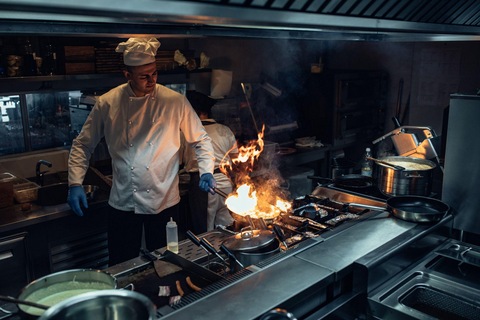
Commercial Kitchen Hood Installation: What to Know Before You Begin
Commercial kitchen hood installation is one of the most important steps in building or renovating a foodservice space. Whether you're planning a full restaurant hood installation or upgrading an existing system, proper ventilation is essential for fire safety, air quality, and code compliance.
A commercial range hood installation removes heat, grease-laden vapors, smoke, and airborne contaminants from the kitchen environment. When designed and installed correctly, it protects staff, equipment, and the building itself. But installing a commercial exhaust hood system is not a DIY project. It requires professional planning, proper ductwork design, and compliance with local regulations.
Here’s what to expect during commercial kitchen hood installation and why working with experienced professionals like HoodMart can make all the difference.
Start with Proper Planning and Manufacturer Consultation
Before any commercial exhaust hood installation begins, it’s critical to consult with an experienced hood manufacturer like HoodMart. The right system depends on more than just kitchen size. It must match your cooking equipment, airflow requirements, and local code standards.
Professional consultation helps ensure your commercial kitchen hood installation accounts for:
- Kitchen square footage and layout
- Type of cooking appliances, such as gas ranges, electric equipment, charbroilers, fryers, and griddles
- Required CFM calculations
- Local building and fire codes
- Duct routing and roof penetration planning
During restaurant hood installation planning, improper sizing or poor duct design can result in airflow problems, inspection failures, or fire hazards. Working with HoodMart helps ensure your system is designed specifically for your application, not guessed at.
If you are still choosing a system, explore HoodMart’s commercial kitchen hoods or use the Hood Builder to start planning your setup.
What Happens During Commercial Exhaust Hood Installation?
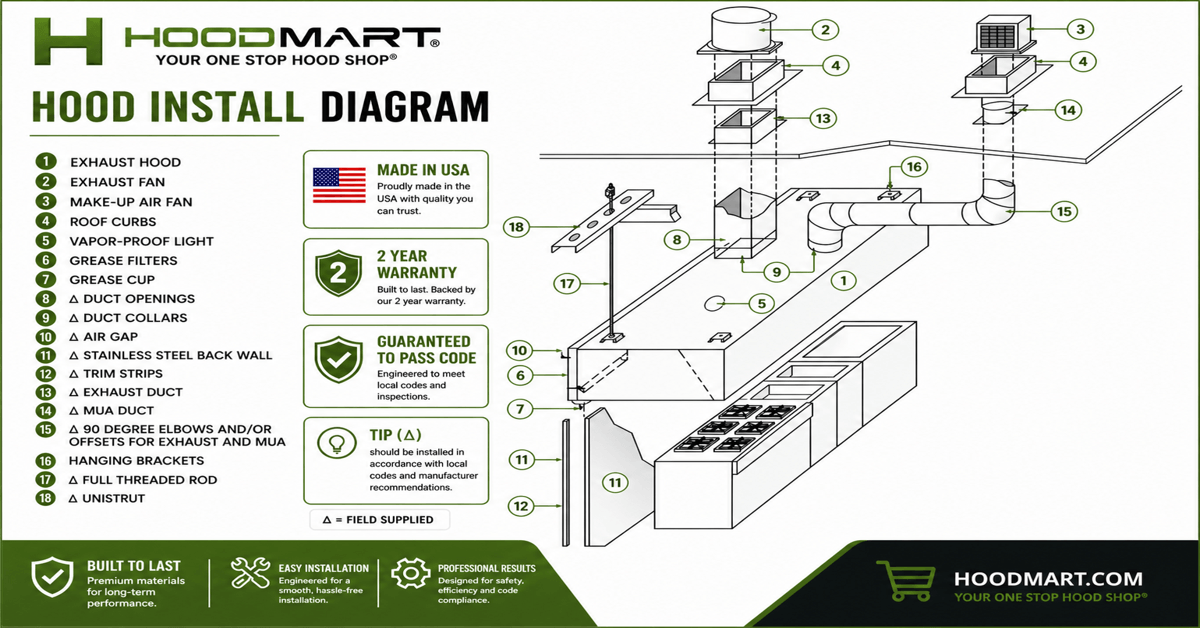
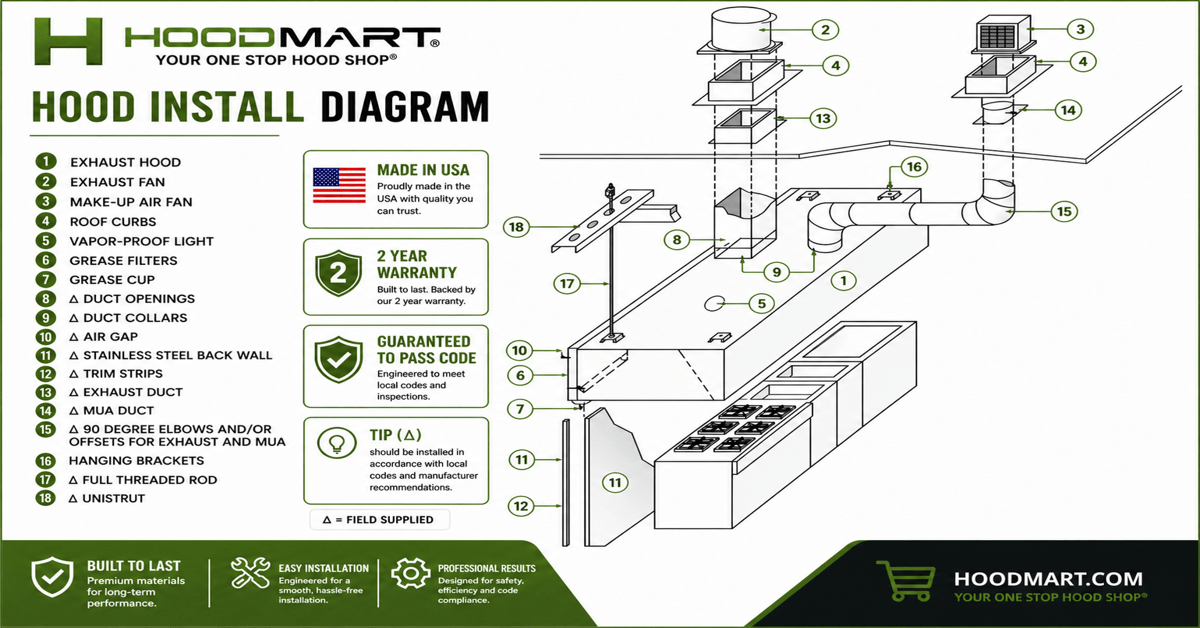
Once the system is designed and approved, the commercial range hood installation process typically follows several structured steps.
First, the hood is securely mounted to the wall or ceiling according to manufacturer specifications. Proper leveling and support are essential to ensure performance and long-term durability.
Next, the ductwork system is installed. This step is often the most complex part of commercial kitchen hood installation. Ductwork transports exhaust air from the hood to the outside of the building and must be properly sealed and routed. Depending on your kitchen layout, this may require cutting through ceilings, walls, or the roof.
After duct installation, contractors typically:
- Connect the hood to the duct system
- Install exhaust fans and make-up air components if required
- Integrate fire suppression systems where applicable
- Seal and secure all joints and connections
- Test the system for proper airflow, capture efficiency, and overall functionality
Each step must meet manufacturer specifications and local mechanical and fire code requirements to pass inspection.
Why Professional Restaurant Hood Installation Is Critical
Commercial kitchen hood installation directly affects safety, efficiency, and long-term operating costs. Attempting a self-installation, even with online tutorials, can lead to serious issues.
Professional installation helps ensure:
- Proper airflow and CFM performance
- Secure duct connections to help prevent grease leaks
- Correct integration of fire suppression systems
- Code compliance with local authorities
- Reduced risk of costly rework or inspection delays
Improper commercial exhaust hood installation can cause air leaks, reduced capture efficiency, increased fire risk, and failed inspections. In contrast, professional restaurant hood installation protects your investment and helps keep your opening timeline on track.
Meeting Code Requirements and CFM Standards
All components of your ventilation system must work together. The hood, ductwork, exhaust fan, and make-up air system must meet the airflow demands of your cooking equipment.
Commercial range hood installation must align with:
- Local mechanical codes
- Fire codes
- Manufacturer installation guidelines
- Required CFM calculations for specific cooking loads
Failing to meet these standards can result in operational inefficiencies and safety concerns. A professionally designed and installed system eliminates guesswork and improves inspection readiness.
Work with HoodMart for Commercial Kitchen Hood Installation
At HoodMart, we understand that commercial kitchen hood installation is more than mounting equipment. It’s about building a safe, compliant, and high-performing kitchen environment.
Our team helps guide you through system selection, planning, and coordination so your commercial exhaust hood installation is completed correctly the first time. Whether you’re planning a new restaurant hood installation or replacing an existing system, we’re here to help simplify the process.
Have questions about commercial range hood installation? Ready to get started? Contact HoodMart today. We look forward to learning more about your project.
Frequently Asked Questions
What is involved in commercial kitchen hood installation?
Commercial kitchen hood installation includes mounting the hood, installing ductwork, connecting exhaust fans, integrating fire suppression systems, and testing airflow performance to ensure code compliance.
How long does restaurant hood installation take?
The timeline depends on kitchen size, duct routing complexity, and local inspections. Most commercial exhaust hood installation projects take several days to complete once equipment is onsite.
Do I need professional installation for a commercial range hood?
Yes. Commercial range hood installation requires professional expertise to ensure proper airflow, fire safety compliance, and adherence to local building and fire codes.
What happens if a commercial exhaust hood is installed incorrectly?
Improper installation can lead to poor ventilation performance, grease leaks, fire hazards, inspection failures, and costly repairs.
Does commercial kitchen hood installation require permits?
Most jurisdictions require permits and inspections for commercial exhaust hood installation. Always verify local code requirements before beginning installation.

 CUSTOM FABRICATORRECEIVE INSTANT QUOTE
Loading Fabricator...
PROJECT ID : T626PROJECT NAME :
Already have a project?
Login 0
0
WELCOME
START YOUR PROJECT »
1-2 WEEKS!
CHOOSE CATEGORY
Worktables
Shelving
Counters & Cabinets


WELCOME TO OUR SHOP
PROJECT DETAILS
MANAGE PROJECTS
Save your current project, or modify your previous projects
CURRENT PROJECT
PROJECT NAME :
PREVIOUS PROJECTS
No Projects found.
Thank you for
creating your project with
North American Kitchen Solutions!
Account Login
Have a design in mind? Contact Us for a Free Consult


Blog Home




Dont see your size or need a custom hood?
Let Us Help You!
Talk to a Specialist
Call Now: 1.800.715.1014