


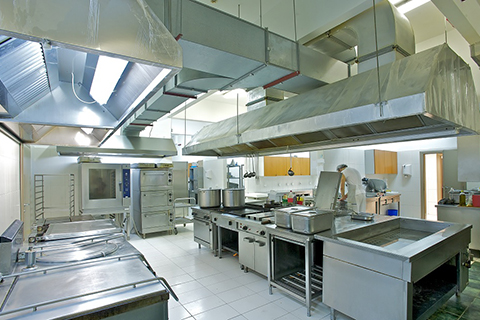
Round vs. Rectangular Exhaust Hood Duct Systems
When building or upgrading a commercial kitchen, ventilation design is one of the most important decisions you’ll make. While selecting the right hood system is critical, the ductwork behind it plays an equally important role in safety and performance.
Many kitchen systems require either round ducting or rectangular ventilation ducting. So how do you determine which option is best for your space?
Let’s break down the differences in grease control, airflow efficiency, cleaning, and fire safety.
Grease Buildup: Why Duct Shape Matters
Grease and smoke are unavoidable byproducts of commercial cooking. How your duct system handles them directly impacts maintenance and fire risk.
Round Duct Systems
Round ducts are widely preferred in commercial kitchens for several reasons:
- No sharp corners for grease to accumulate
- Less surface area for buildup
- Grease naturally settles at the lowest point
- Easier cleaning access
Because of the smooth, circular interior, round duct systems reduce grease buildup compared to rectangular ventilation ducting. This lowers the risk of grease duct fires and simplifies long-term maintenance.
Rectangular Duct Systems
With extractor fan rectangular ducting or a range hood rectangular duct configuration, the flat surfaces and sharp corners create problem areas:
- Grease accumulates in corners and crevices
- Larger surface area encourages buildup
- Cleaning is more difficult
- Fire can spread more quickly through accumulated grease
While rectangular ducting can still meet code when properly installed and maintained, it generally requires more frequent and thorough cleaning to manage buildup.
Airflow Efficiency: Round vs. Rectangular Ventilation Ducting
A hood system is only as effective as the ductwork allows. Poor airflow leads to:
- Smoke lingering in the kitchen
- Excess grease deposits
- Increased fire risk
- Health and inspection concerns
Why Round Ducting Performs Better
Round duct systems have significantly lower friction than rectangular ventilation ducting — up to 45% less in many applications.
The circular design allows air to move naturally and evenly through the duct. This results in:
- Higher airflow capacity
- Less turbulence
- Reduced system strain
- Quieter operation
With fewer airflow collisions inside the duct, grease particles are less likely to cling to surfaces, further reducing buildup.
Rectangular Duct Airflow Challenges
In a range hood rectangular duct system, flat interior surfaces disrupt airflow. Air hits the corners and creates turbulence, which:
- Reduces airflow efficiency
- Increases noise
- Encourages grease deposits
- Strains the exhaust fan
Over time, this inefficiency can impact overall hood performance and require more frequent maintenance.
Installation Considerations
While round duct systems are typically more efficient, rectangular ventilation ducting may be necessary in certain scenarios:
- Limited ceiling space
- Retrofitting older buildings
- Structural limitations
- Existing extractor fan rectangular ducting configurations
In renovation projects, replacing a rectangular duct with a round system may require structural modifications. In these cases, compatibility and code compliance must be carefully evaluated.
Hoodmart’s best tip? Work with a professional installer for results you can trust.
Fire Safety and Maintenance
Grease duct fires spread faster in systems where buildup accumulates in corners and flat surfaces.
Because round ducts reduce buildup and allow for easier cleaning, they are often considered the safer long-term option for new installations.
Regardless of duct shape, proper installation, regular inspections, and professional cleaning are critical for maintaining a safe commercial kitchen.
Which Duct System Is Right for Your Kitchen?
For most new commercial kitchen installations, round duct systems offer:
- Greater airflow efficiency
- Reduced grease buildup
- Easier maintenance
- Lower long-term fire risk
However, rectangular ventilation ducting may be required in older facilities or tight spaces.
If you're planning a new build or upgrading your exhaust system, comparing both configurations with a ventilation expert ensures the best outcome for your layout and equipment.
Work with HoodMart for Complete Ventilation Solutions
HoodMart provides a full range of commercial exhaust hood systems — from Compensating (Short Cycle) hoods to Perforated Supply Plenum (PSP) systems — along with essential accessories like:
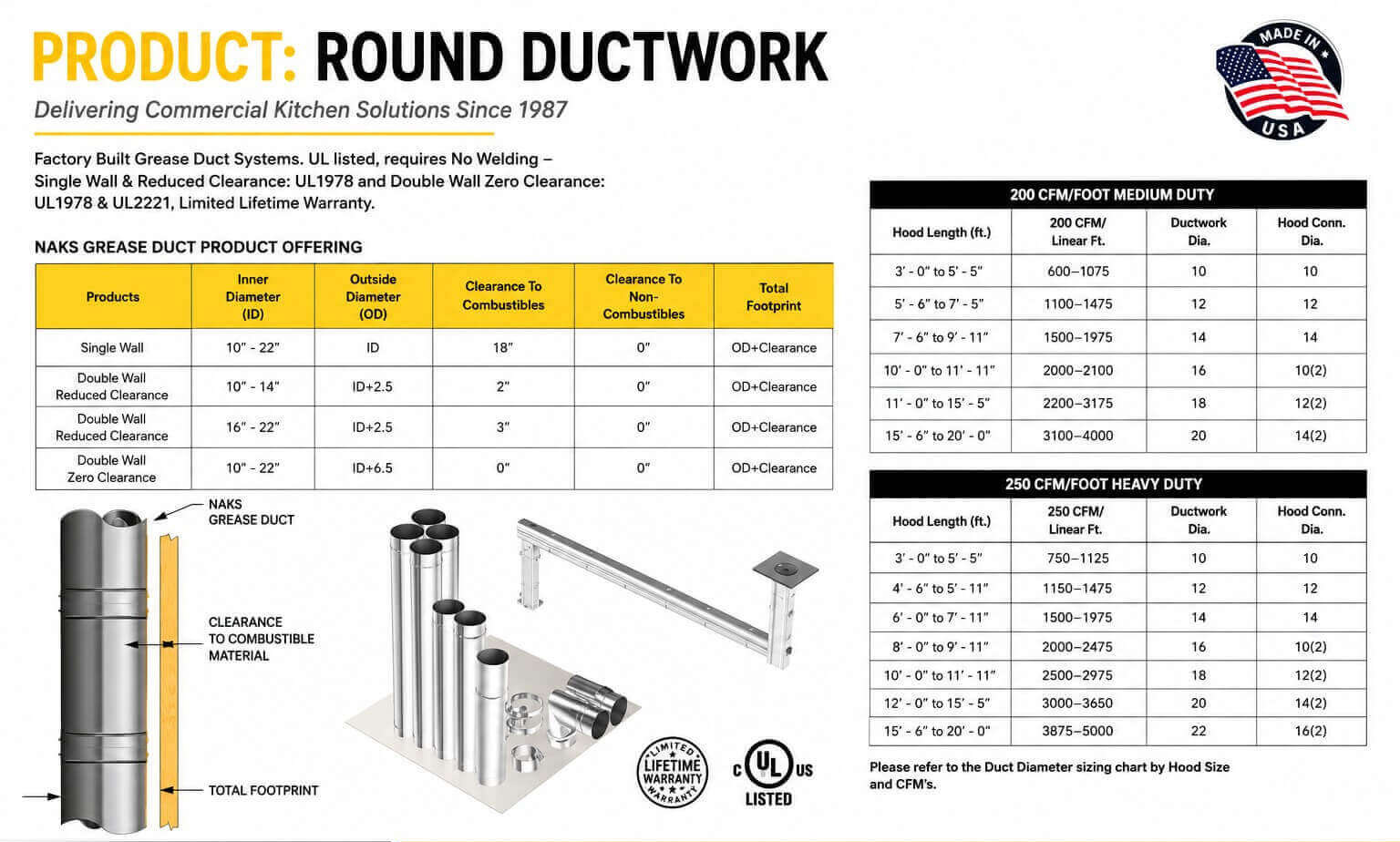
- No-weld grease duct
- Hood filters
- Canopy hood lights
- Roof curbs
If you’re deciding between rectangular ventilation ducting and round systems, our team can help you determine the right configuration for your kitchen’s layout and performance needs.
Call 1.866.692.5872 or get your free hood quote today.

 CUSTOM FABRICATORRECEIVE INSTANT QUOTE
Loading Fabricator...
PROJECT ID : T626PROJECT NAME :
Already have a project?
Login 0
0
WELCOME
START YOUR PROJECT »
1-2 WEEKS!
CHOOSE CATEGORY

Worktables
Shelving

Counters & Cabinets


WELCOME TO OUR SHOP
PROJECT DETAILS
MANAGE PROJECTS
Save your current project, or modify your previous projects
CURRENT PROJECT
PROJECT NAME :
PREVIOUS PROJECTS
No Projects found.
Thank you for
creating your project with
North American Kitchen Solutions!
Account Login
Have a design in mind? Contact Us for a Free Consult




Blog Home




Dont see your size or need a custom hood?
Let Us Help You!
Talk to a Specialist
Call Now: 1.800.715.1014