

¿Cuántos CFM necesita para una campana de ventilación comercial? | HoodMart
- Junio 22, 2026
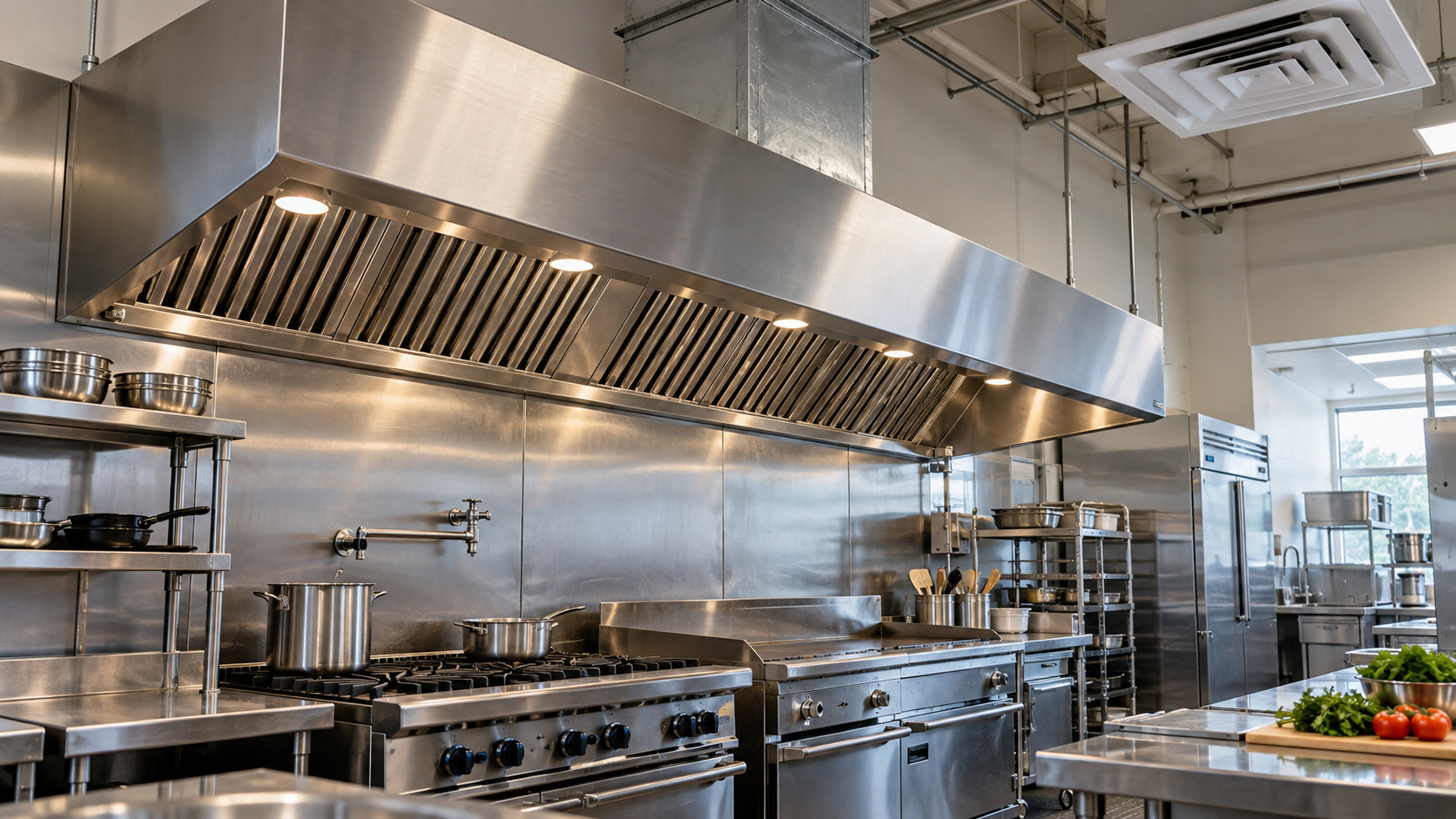
Choosing the right airflow capacity is one of the most important decisions when selecting a commercial ventilation hood. If you've ever wondered, “How many CFM for a kitchen hood is enough?”, you're not alone. CFM, cubic feet per minute, directly impacts air quality, fire safety, and code compliance in your commercial kitchen.
Understanding how to calculate CFM for a range hood ensures your system removes smoke, grease-laden vapors, and heat efficiently without creating airflow imbalances. Here’s what you need to know, straight from the experts at HoodMart.
What Is CFM and Why Does It Matter?
CFM, or cubic feet per minute, measures how much air a commercial hood can move in one minute. The higher the CFM rating, the more air the system exhausts from the kitchen. The recommended CFM for a range hood depends on several factors, including kitchen size, cooking equipment, and local code requirements.
If your system has too little airflow:
- Smoke and grease can accumulate
- Heat buildup increases
- Air quality suffers
- Fire risk may rise
If the CFM is too high for the space:
- Negative air pressure may occur
- Doors may become difficult to open
- Drafts and temperature fluctuations can develop
- Energy efficiency may decrease
Proper airflow balance is essential for performance and comfort.
Step 1: Calculate Kitchen Volume
The first step in determining how many CFM for a range hood you need is calculating the cubic footage of your kitchen.
Measure:
- Length
- Width
- Height
Multiply those numbers together to determine cubic volume.
For example:
10 ft (L) × 15 ft (W) × 8 ft (H) = 1,200 cubic feet
This calculation helps ventilation professionals determine baseline airflow needs. Having this information ready makes it easier to calculate CFM for a range hood accurately.
Step 2: Measure Cooking Surface Area
Next, determine the size of your cooking equipment. Measure the length and width of each cooktop or range.
For example:
4 ft × 2 ft = 8 square feet of cooking surface
If you operate multiple appliances, calculate the total cooking surface area. Larger or more intensive cooking setups require higher airflow.
When asking how many CFM for kitchen hood sizing is correct, cooking surface area is a key variable.
Step 3: Evaluate Cooking Type and Heat Load
Not all kitchens generate the same amount of heat and grease.
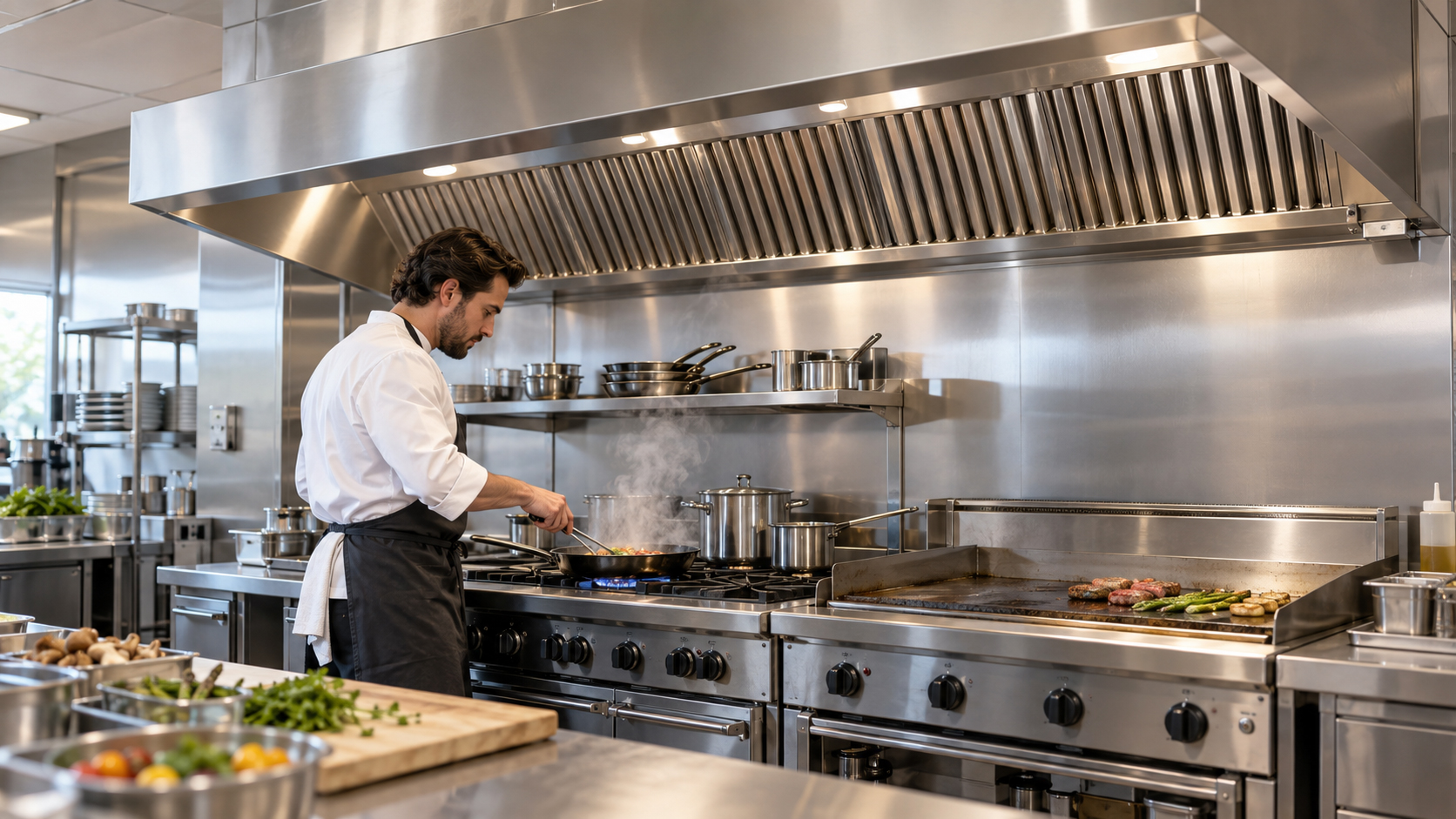
High-heat, grease-heavy cooking produces significantly more smoke and vapor than lighter-duty cooking methods such as:
- Grilling
- Broiling
- Frying
- Charbroiling
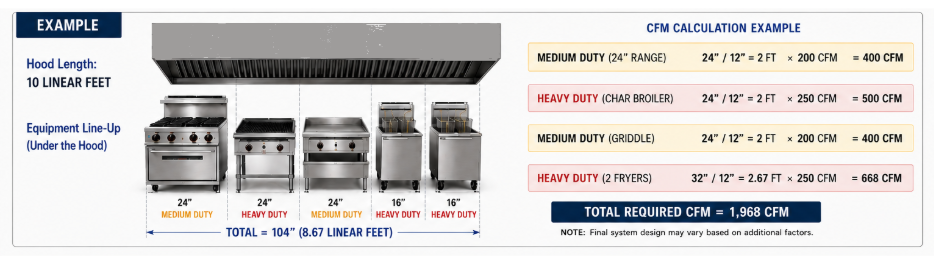
The recommended CFM for range hood applications increases with higher heat loads. Heavy-duty cooking operations typically require more powerful exhaust systems to maintain safe air quality.
Step 4: Review Code and UL Requirements
Local building and fire codes may specify minimum airflow requirements for commercial ventilation systems. These requirements often consider:
- Appliance type
- Cooking surface size
- Hood length
- Grease production levels
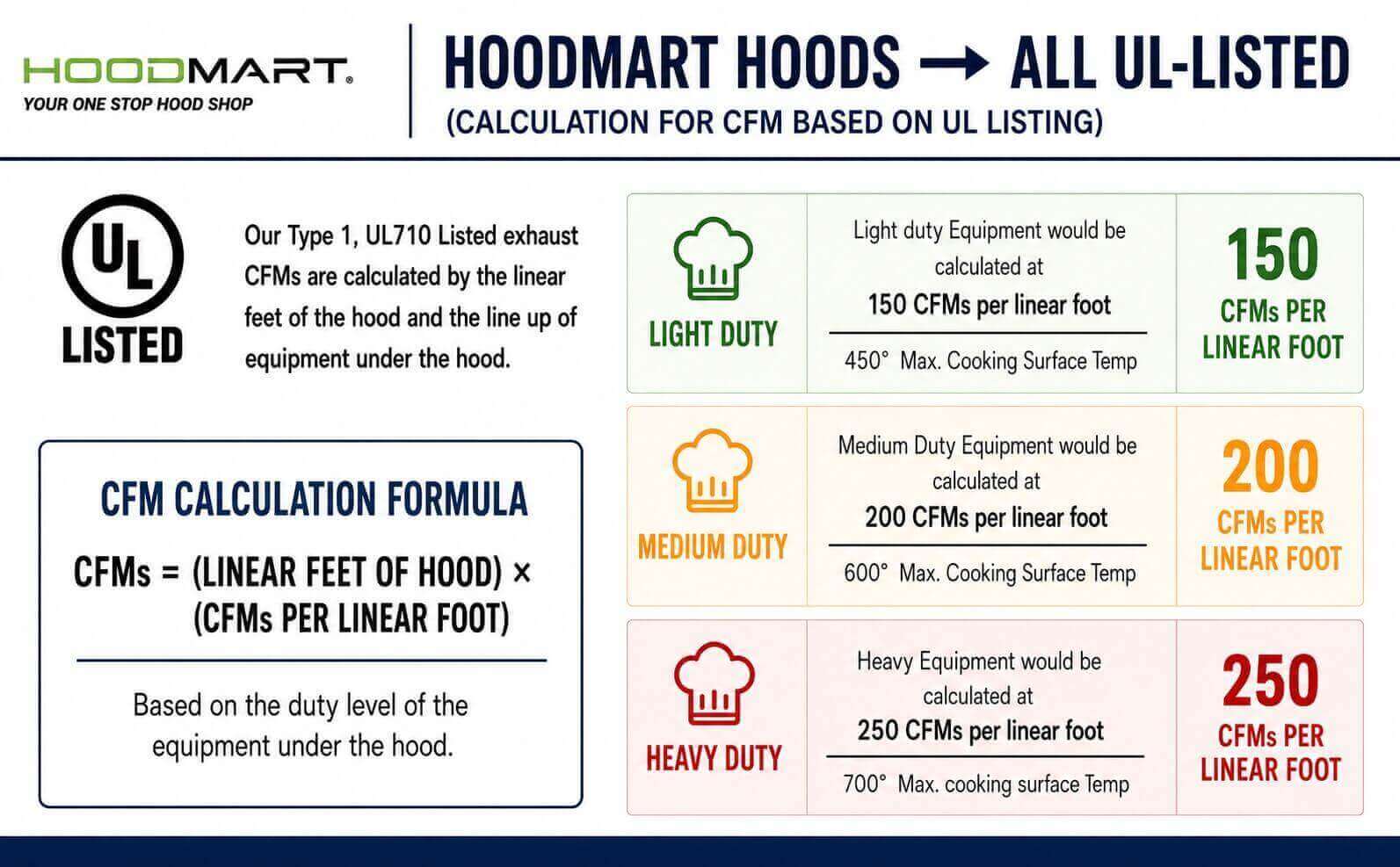
For example, to qualify as a UL 710-listed Type 1 hood, CFM calculations are based on the maximum cooking surface of the appliance being served and the linear feet of the hood.
Always verify local requirements before finalizing your ventilation design.
Why Professional CFM Calculations Matter
Determining how many CFM for a range hood is required involves more than simple math. Airflow balance, duct design, exhaust fan capacity, and makeup air systems must work together.
Improper sizing can lead to:
- Inspection failures
- Inefficient capture performance
- Pressure imbalances
- Increased operating costs
Because HoodMart systems are custom-built for each kitchen, professional guidance ensures your commercial ventilation hood is properly sized for safety, compliance, and performance.
Get the Right CFM for Your Commercial Kitchen
Selecting the correct airflow capacity protects your staff, your equipment, and your investment. By understanding how to calculate CFM for a range hood and considering cooking load, kitchen volume, and code requirements, you can make an informed decision.
Still unsure how many CFM for kitchen hood sizing is right for your space? Contact the HoodMart team at 1-855-411-6386 or request a kitchen hood quote today. We’ll help design a system tailored to your exact kitchen requirements.
Frequently Asked Questions
Q: How many CFM for a range hood do I need in a commercial kitchen?
A: The required CFM depends on kitchen size, cooking surface area, appliance type, and local codes. High-heat cooking typically requires higher airflow capacity.
Q: How do you calculate CFM for a range hood?
A: To calculate CFM for a range hood, determine your kitchen’s cubic footage, measure cooking surface area, evaluate heat load, and review local code requirements.
Q: What is the recommended CFM for range hood systems?
A: The recommended CFM for range hood applications varies based on equipment type and cooking intensity. Heavy-duty cooking operations require higher airflow.
Q: What happens if my kitchen hood CFM is too low?
A: If CFM is too low, smoke, grease, and heat can accumulate, reducing air quality and increasing fire risk.
Q: Can CFM be too high for a commercial kitchen hood?
A: Yes. Excessively high CFM can create negative air pressure, drafts, and energy inefficiency if not properly balanced with makeup air.

 CUSTOM FABRICATORRECEIVE INSTANT QUOTE
Loading Fabricator...
PROJECT ID : T626PROJECT NAME :
Already have a project?
Login 0
0
WELCOME
START YOUR PROJECT »
1-2 WEEKS!
CHOOSE CATEGORY
Worktables
Shelving
Counters & Cabinets


WELCOME TO OUR SHOP
PROJECT DETAILS
MANAGE PROJECTS
Save your current project, or modify your previous projects
CURRENT PROJECT
PROJECT NAME :
PREVIOUS PROJECTS
No Projects found.
Thank you for
creating your project with
North American Kitchen Solutions!
Account Login
Have a design in mind? Contact Us for a Free Consult
Blog Home




Dont see your size or need a custom hood?
Let Us Help You!
Talk to a Specialist
Call Now: 1.800.715.1014