

Entender las normativas locales de incendios y seguridad para campanas de cocina
- Noviembre 21, 2025
Running a commercial kitchen means staying on top of more than just great food and fast service—you also need to meet strict local fire and safety regulations. One of the most important parts of any commercial kitchen’s fire protection plan is its ventilation hood and fire suppression system.
Understanding these regulations helps keep your staff and customers safe, protects your property, and ensures your business stays compliant with fire codes. This article breaks down the key regulations you should know, how commercial kitchen ventilation systems and hood fire suppression systems fit into those rules, and why working with experts is essential.
Note: This article is for educational purposes only and does not constitute legal advice. Always consult local authorities and certified professionals for requirements in your jurisdiction.
Why Kitchen Hoods Are Central to Fire Code Compliance
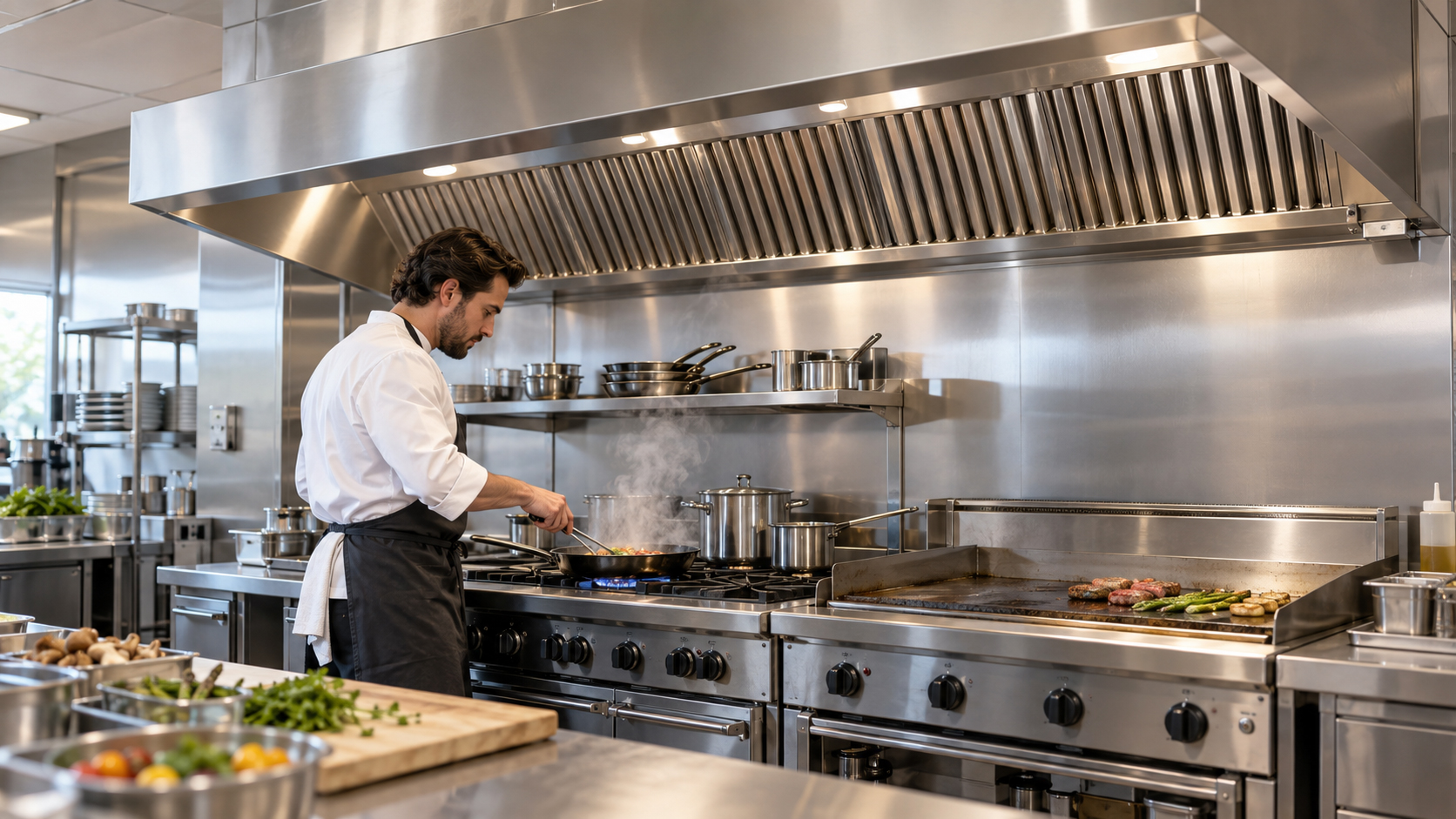
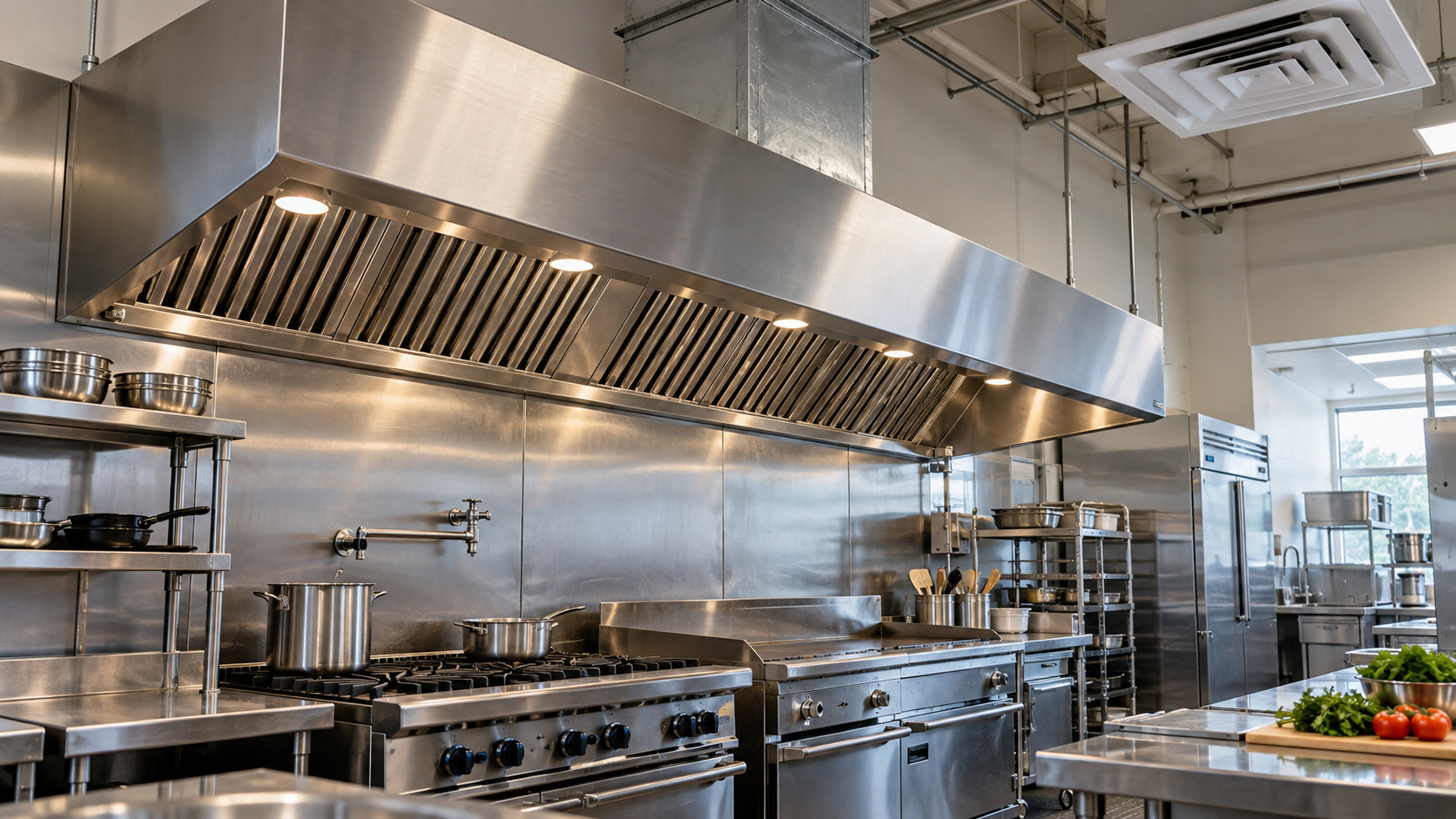
Commercial kitchen hoods—also called exhaust hoods or range hoods—play a critical role in maintaining a safe and compliant kitchen. Their primary job is to:
- Capture grease-laden vapors, smoke, and steam produced during cooking
- Filter and remove airborne contaminants
- Prevent grease buildup that can fuel dangerous fires
- Improve indoor air quality for staff and guests
Without proper hood ventilation, fire risks increase dramatically. That’s why local fire marshals and building departments regulate not only hood size and placement, but also the integration of commercial fire suppression systems directly into these hoods.
Key Local Fire and Safety Regulations for Kitchen Hoods
Fire and safety regulations vary by jurisdiction, but most cover similar core areas. Here’s a simplified overview of what local codes typically require:
1. Hood Size and Placement
Local building and fire codes often specify:
- Minimum capture area based on the size and type of cooking equipment
- Required distance between the hood and cooking surface
- CFM requirements (cubic feet per minute) to ensure effective airflow
Getting this wrong can lead to inefficient ventilation, excess grease buildup, or fire code violations. HoodMart provides detailed sizing and CFM guidelines for commercial exhaust hoods to help you select the right system for your space.
2. Ventilation System Requirements
Regulations typically outline:
- The type of exhaust fans and ductwork required
- Proper airflow rates to keep grease and heat moving safely out of the kitchen
- The use of makeup air units to maintain balanced air pressure
A well-designed commercial kitchen ventilation system ensures both safety and comfort while keeping you compliant.
3. Fire Suppression Systems
This is a critical area for compliance. Local codes almost always require:
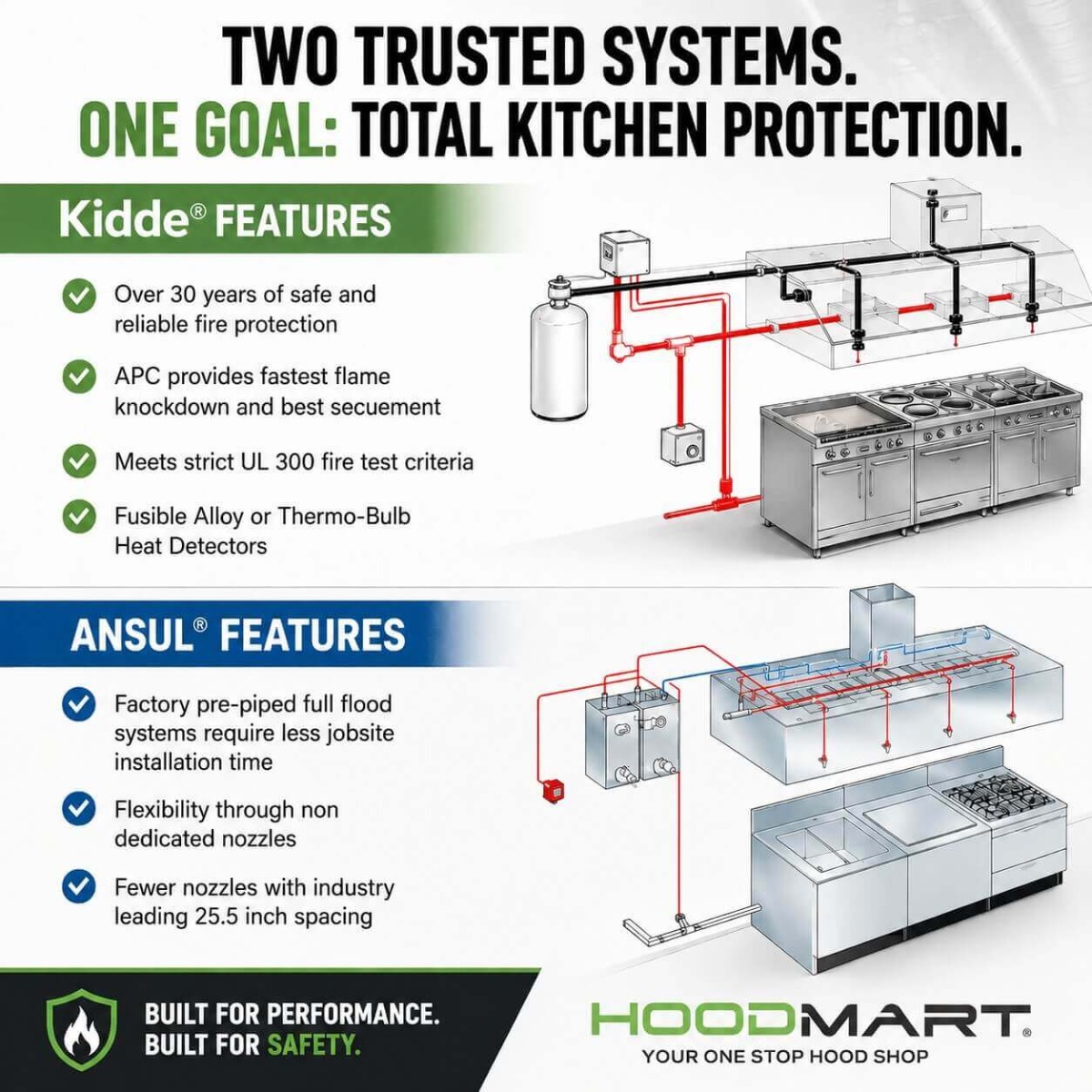
- Automatic fire suppression systems (UL 300 wet chemical) for Type I hoods handling grease-laden vapors
- Integration of hood fire suppression nozzles directly above cooking equipment
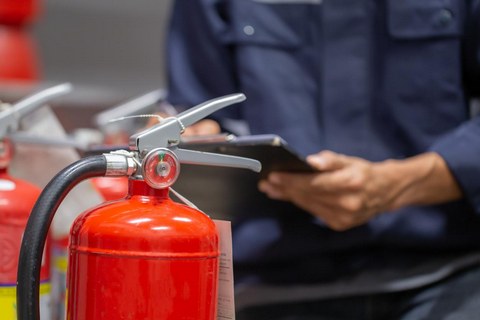
- Proper placement of fire extinguishers within easy reach of staff
A commercial hood fire suppression system detects flames and discharges a wet chemical agent that smothers grease fires and shuts off gas and electric to the affected appliances—providing immediate protection before a fire spreads.
4. Regular Maintenance and Inspections
Most jurisdictions require:
- Semi-annual inspections by certified fire suppression technicians
- Regular hood and duct cleaning to remove grease buildup
- Tagging and documentation to prove compliance
Failing to maintain and inspect your system is one of the fastest ways to fall out of compliance—and face penalties.
Why Fire Regulation Compliance Matters: Penalties and Risks
- Costly fines from local fire authorities
- Business closures until violations are corrected
- Insurance complications, including denied claims if a fire occurs
- Increased risk of injury and property damage
Staying compliant not only protects lives and property—it protects your bottom line.
FAQs: Kitchen Hood Fire Regulations
Q: Are fire suppression systems required in all commercial kitchen hoods?
A: Yes. Any Type I hood that handles grease-laden vapors must have a UL 300 wet chemical commercial fire suppression system installed.
Q: How often should hoods and fire suppression systems be inspected?
A: Most jurisdictions require professional inspections every six months, along with regular hood cleaning to maintain compliance.
Q: What happens if my system isn’t up to code?
A: You may face fines, be forced to shut down operations until issues are corrected, or risk voiding your insurance coverage.
Stay Compliant and Protected — Request a Quote Today
Fire and safety compliance is non-negotiable for any commercial kitchen. By understanding your local regulations, maintaining your ventilation hood properly, and installing a code-compliant fire suppression system, you can protect your staff, property, and business.
Need fire suppression installation? Bundle and Save — Combine your hood, fire suppression, and fire install to save you time, money, and hassle.
* Must purchase hood & fire system from HoodMart for installation services; only includes fire installation, does not include hood installation.

 CUSTOM FABRICATORRECEIVE INSTANT QUOTE
Loading Fabricator...
PROJECT ID : T626PROJECT NAME :
Already have a project?
Login 0
0
WELCOME
START YOUR PROJECT »
1-2 WEEKS!
CHOOSE CATEGORY
Worktables
Shelving
Counters & Cabinets

WELCOME TO OUR SHOP
PROJECT DETAILS
MANAGE PROJECTS
Save your current project, or modify your previous projects
CURRENT PROJECT
PROJECT NAME :
PREVIOUS PROJECTS
No Projects found.
Thank you for
creating your project with
North American Kitchen Solutions!
Account Login
Have a design in mind? Contact Us for a Free Consult
Blog Home




Dont see your size or need a custom hood?
Let Us Help You!
Talk to a Specialist
Call Now: 1.800.715.1014