


Los beneficios y las limitaciones de las campanas sin ventilación para cocinas comerciales
- Julio 01, 2026
The Benefits and Limitations of Ventless Hoods for Commercial Kitchens
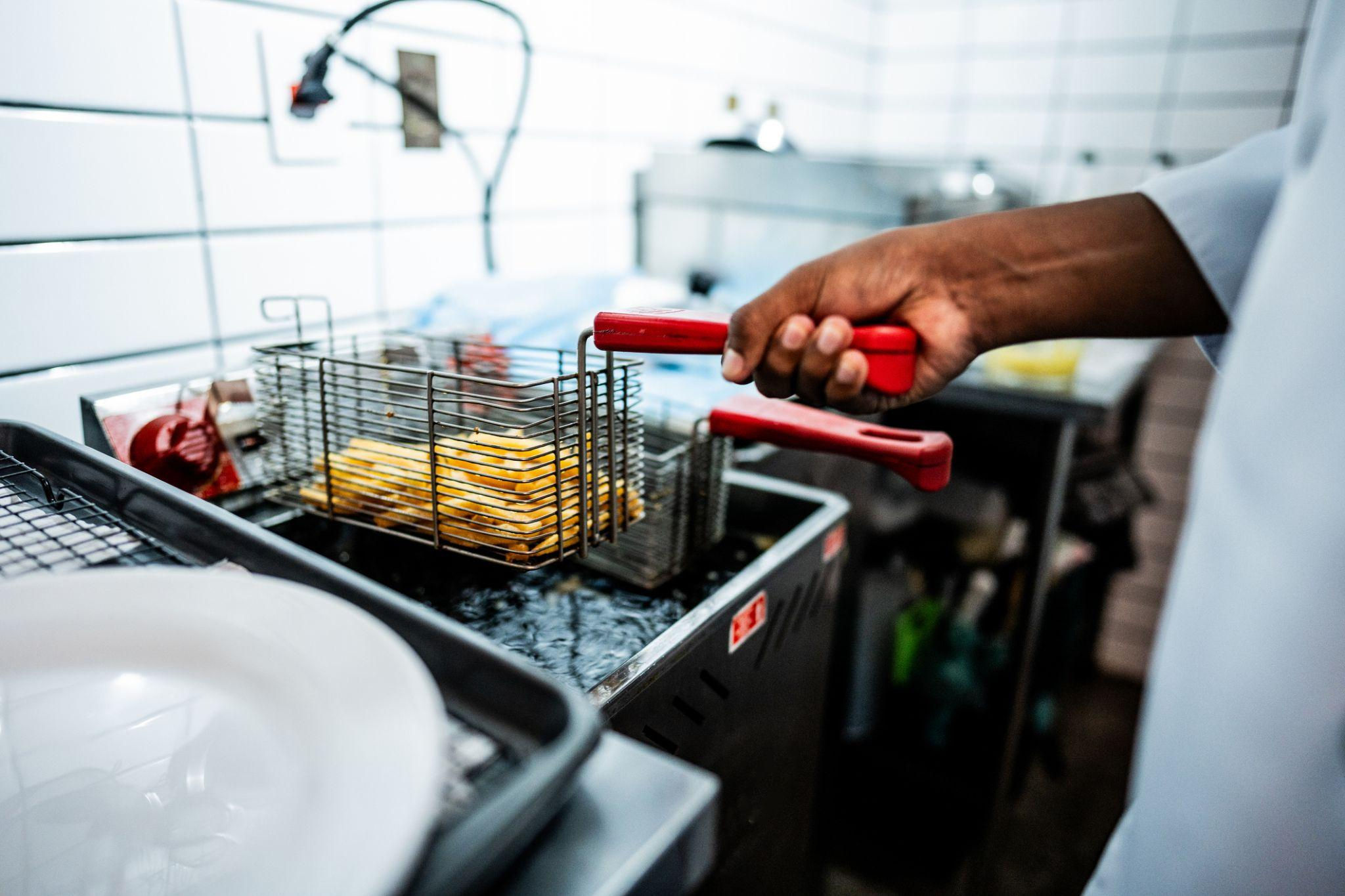
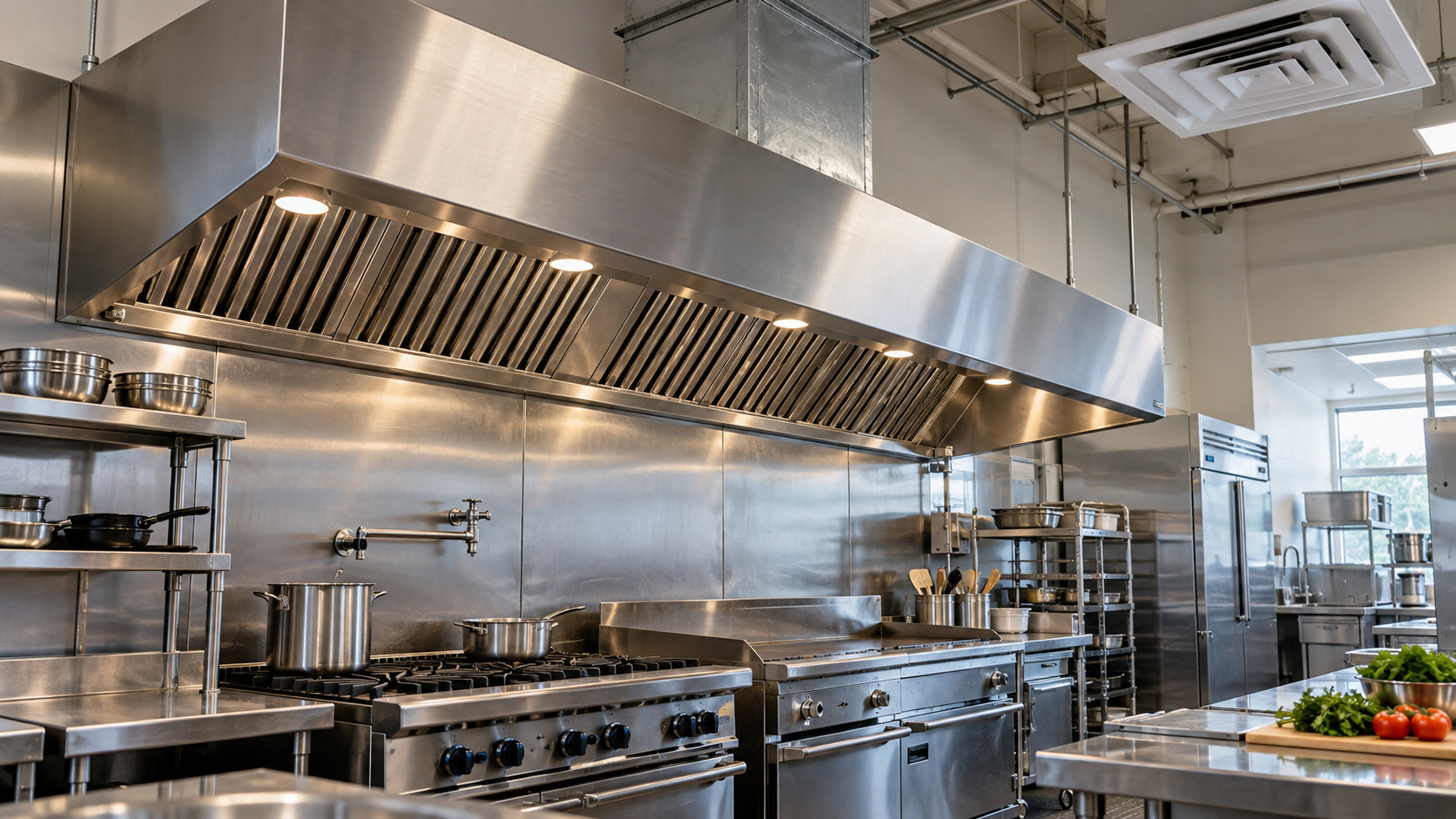
Commercial kitchens require proper ventilation to remove heat, grease, smoke, and odors produced during cooking. Traditionally, this has meant installing ducted hood systems that exhaust air outside the building.
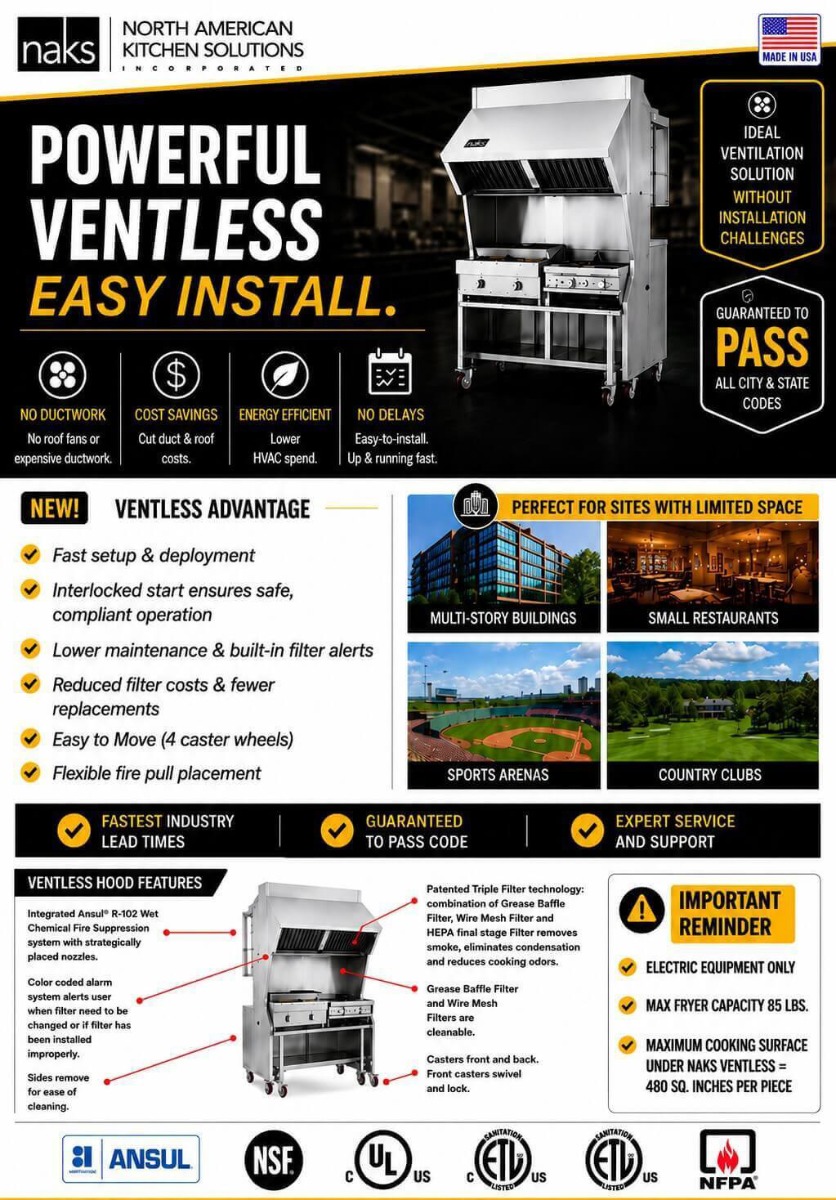
However, ventless kitchen exhaust hoods offer an alternative approach. Instead of relying on ductwork, these systems use advanced filtration technology to clean and recirculate the air.
For restaurants operating in tight spaces or buildings where ductwork is difficult to install, a ventless commercial kitchen hood can offer major advantages. Here’s what you need to know, straight from the experts at HoodMart.
Ventless Range Hoods at a Glance: Cheat Sheet
Ventless ductless range hoods filter and recirculate air instead of exhausting it outdoors. They use multi-stage filtration systems to capture grease, smoke, and odors from cooking equipment.
Key benefits of ventless kitchen exhaust hoods:
- No external ductwork required
- Faster and easier installation
- Flexible kitchen layouts
- Lower HVAC energy loss
- Ideal for small kitchens or leased spaces
Common limitations:
- Not suitable for heavy grease or high-heat cooking
- Filters require regular maintenance
- Limited capacity for large kitchens
Understanding these pros and cons helps operators determine whether a ventless commercial kitchen hood is the right solution.
How Do Ductless Range Hoods Work?
Many operators ask: How do ductless range hoods work? Instead of venting air outside, ventless ductless range hoods clean the air using a series of filters before releasing it back into the kitchen.
Typical filtration systems include:
- Grease filters to capture grease particles
- Charcoal filters to reduce odors
- High-efficiency particulate filters to remove smoke and fine particles
This filtration process allows the hood to operate without external ductwork while still improving indoor air quality.
Benefits of Ventless Kitchen Exhaust Hoods
For many commercial kitchens, ventless kitchen exhaust hoods provide several important advantages. These include:
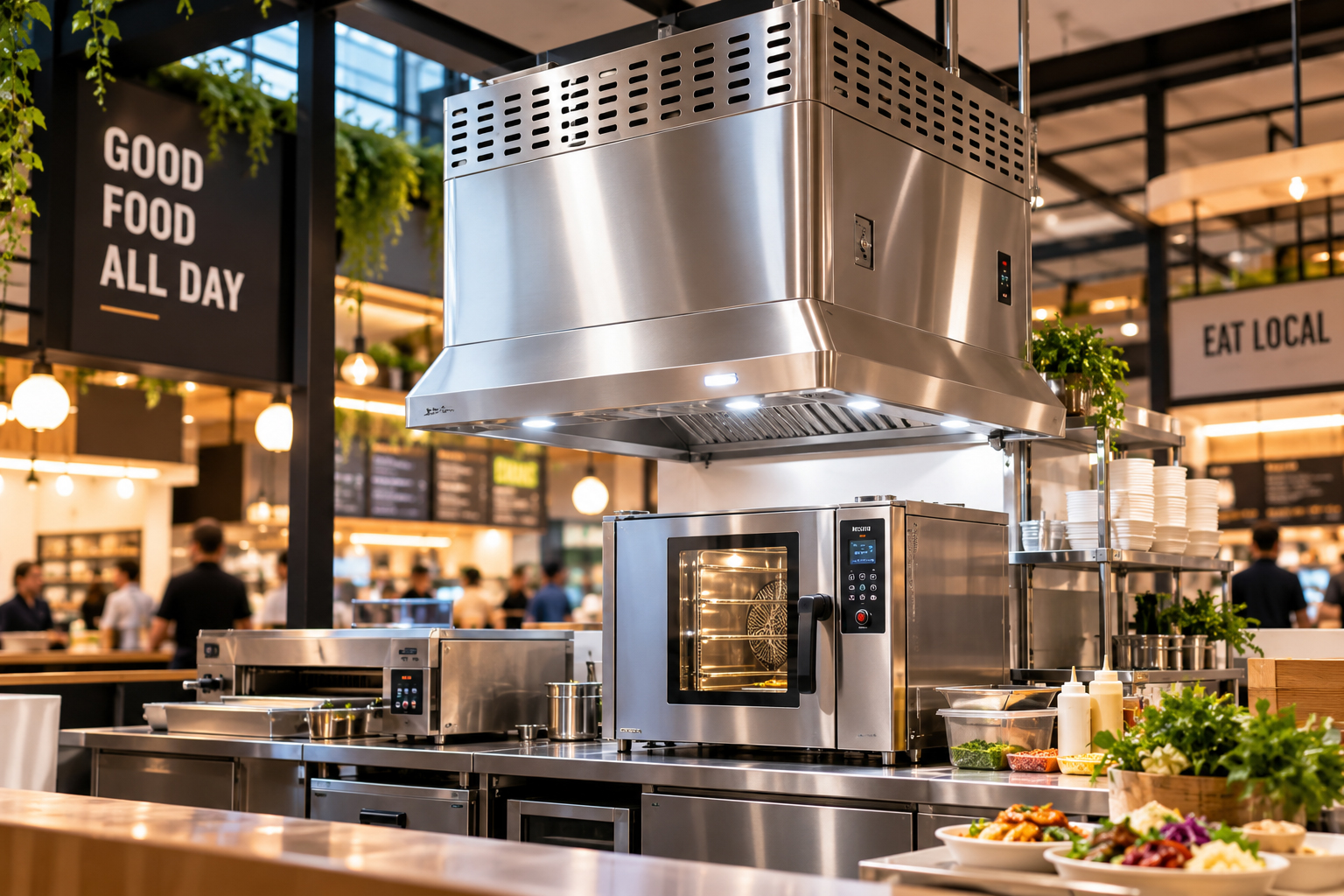
Easier Installation: Because they don’t require ductwork, ventless commercial kitchen hood systems are much easier to install. They are especially useful in:
- Older buildings
- Shopping malls
- Food courts
- Historic properties
- Leased restaurant spaces
Without roof penetrations or extensive duct runs, installation costs and timelines are often significantly reduced.
Space-Saving Kitchen Design: Traditional duct systems can take up valuable space above ceilings and along walls. A ductless hood kitchen system eliminates the need for large duct runs, making it easier to design compact kitchens and maximize workspace. This flexibility can be especially helpful for:
- Small restaurants
- Ghost kitchens
- Food kiosks
- Cafés and coffee shops
Energy Efficiency: Traditional exhaust hoods remove large amounts of air from a building, which must then be replaced by conditioned air from the HVAC system. Because ventless ductless range hoods recirculate filtered air instead, they reduce HVAC load and can help improve energy efficiency. This can lower overall energy consumption while maintaining safe kitchen ventilation.
Flexible Cooking Equipment Options: Some ventless cooking systems only work with a single appliance type. However, modern ventless commercial kitchen hood systems can support multiple types of electric cooking equipment.
Depending on the system, compatible equipment may include:
- Electric fryers
- Electric ovens
- Induction cooktops
- Countertop cooking appliances
This flexibility allows operators to adjust their kitchen setup as menus evolve.
Limitations of Ventless Commercial Kitchen Hoods
Despite their advantages, ventless kitchen exhaust hoods are not the right choice for every kitchen. Understanding their limitations is important when planning a commercial kitchen ventilation system. These limitations include:
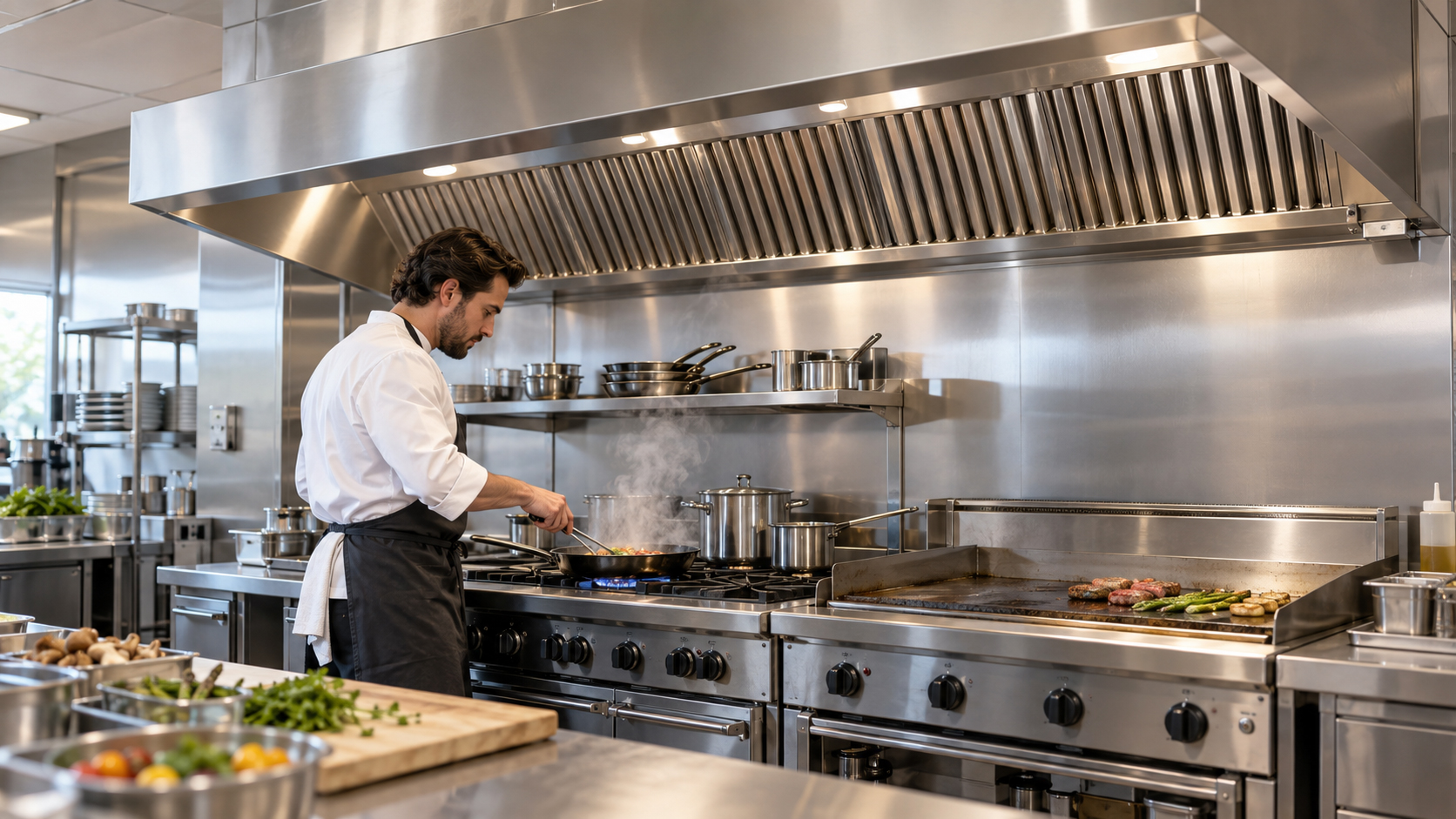
Not Suitable for High-Heat Cooking: Ventless systems generally work best with moderate cooking loads and electric equipment. They are usually not suitable for high-grease or open-flame cooking, such as:
- Charbroilers
- Gas grills
- High-volume frying operations
In these cases, traditional exhaust hood systems are typically required for safety and code compliance.
Regular Filter Maintenance Is Required: Because ventless systems rely on filtration instead of duct exhaust, regular maintenance is essential. Filters must be:
- Cleaned regularly
- Replaced typically every 3-4 months based on usage
- Inspected for grease buildup
Neglecting commercial kitchen maintenance can reduce performance and increase fire risk.
Limited Capacity for Large Kitchens: While ventless systems work well for smaller operations, they may not provide enough airflow capacity for large commercial kitchens.
High-volume restaurants with multiple cooking lines typically require traditional ducted hood systems to properly manage heat and grease production.
Is a Ventless Hood Right for Your Kitchen?
A ventless commercial kitchen hood can be an excellent solution when traditional ventilation is difficult or expensive to install. They are often a great fit for:
- Small restaurants
- Food courts and kiosks
- Cafés and coffee shops
- Ghost kitchens
- Leased spaces where ducting is restricted
However, kitchens using gas appliances or high-heat cooking equipment may still require a traditional ventilation system.
Find the Right Ventilation Solution With HoodMart
Choosing between a ventless kitchen exhaust hood and a traditional ducted hood system depends on your kitchen layout, cooking equipment, and overall production volume. If your space makes ductwork difficult - or you’re working with electric cooking equipment - a ventless commercial kitchen hood may offer a flexible and efficient solution.
HoodMart provides a full range of commercial ventilation systems designed for safety, performance, and code compliance, including ventless hood systems, traditional exhaust hoods, fire suppression solutions, and essential ventilation accessories.
If you’re exploring whether a ventless system is right for your operation, our team can help you compare options and find the best fit for your kitchen. Request a ventless hood quote today!
Frequently Asked Questions About Ventless Hoods
Q: What is a ventless commercial kitchen hood?
A: A ventless commercial kitchen hood is a ventilation system that uses filtration to remove grease, smoke, and odors instead of exhausting air outside through ductwork.
Q: How do ductless range hoods work?
A: Ductless range hoods use multi-stage filtration systems, such as grease filters and charcoal filters, to clean the air before recirculating it back into the kitchen.
Q: Are ventless kitchen exhaust hoods safe?
A: Yes, when properly installed and maintained, ventless kitchen exhaust hoods can safely filter cooking contaminants and improve indoor air quality.
Q: Can ventless hoods handle all cooking equipment?
A: No. Ventless ductless range hoods are typically designed for electric cooking equipment and moderate cooking loads, not high-grease or open-flame cooking.
Q: Do ventless hoods require maintenance?
A: Yes. Filters must be cleaned or replaced regularly to ensure proper airflow, odor removal, and fire safety.

 CUSTOM FABRICATORRECEIVE INSTANT QUOTE
Loading Fabricator...
PROJECT ID : T626PROJECT NAME :
Already have a project?
Login 0
0
WELCOME
START YOUR PROJECT »
1-2 WEEKS!
CHOOSE CATEGORY
Worktables
Shelving
Counters & Cabinets


WELCOME TO OUR SHOP
PROJECT DETAILS
MANAGE PROJECTS
Save your current project, or modify your previous projects
CURRENT PROJECT
PROJECT NAME :
PREVIOUS PROJECTS
No Projects found.
Thank you for
creating your project with
North American Kitchen Solutions!
Account Login
Have a design in mind? Contact Us for a Free Consult
Blog Home




Dont see your size or need a custom hood?
Let Us Help You!
Talk to a Specialist
Call Now: 1.800.715.1014