

Venting a Ghost Kitchen or Food Hall Stall with a Hanging Ventless Exhaust Hood
- Octubre 12, 2026
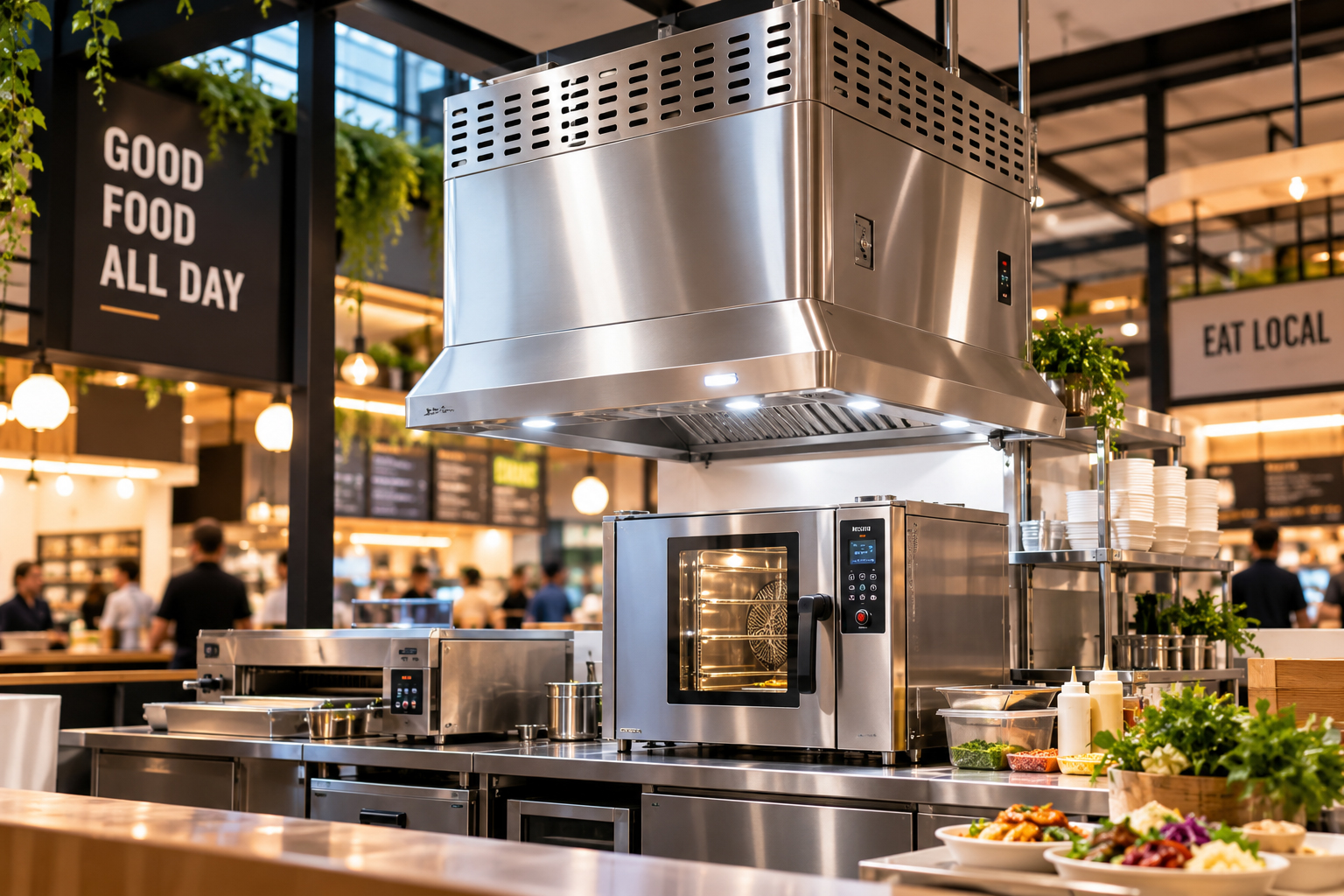
Ghost kitchens and food hall stalls share a problem most standalone restaurants never deal with: someone else owns the roof. Landlords in these buildings rarely allow new penetrations, and shared ductwork, if it exists at all, is usually already spoken for. A hanging ventless exhaust hood was built for exactly this situation.
Why Standard Ventilation Doesn't Work In Ghost Kitchens
A traditional hood needs a duct run to the roof or an exterior wall, plus a dedicated exhaust fan. In a food hall or multi-tenant ghost kitchen facility, that usually means:
- Getting sign-off from a landlord who has no incentive to approve structural changes
- Competing with other tenants for shared duct capacity
- Paying for an engineering review on a space you may not occupy for more than a year or two
- Delaying your opening while approvals work through the building
None of that is a small tenant's problem to solve, and often it isn't solvable at all.
Recirculation Is The Secret To Ventless Solutions
Because it filters and recirculates air on its own, a hanging ventless hood from HoodMart needs nothing from the building around it. It doesn't touch the roof, doesn't tie into shared ductwork, and doesn't require the landlord's engineering department to get involved.
That makes it a fit for:
- Ghost kitchen suites where each tenant operates independently
- Food hall stalls with fixed, non-negotiable infrastructure
- Mall-based and airport concepts with strict build-out rules
- Pop-up and short-term leases where a permanent duct run doesn't make sense
Hanging Ventless Exhaust Hoods: Purpose-Built For Small Spaces
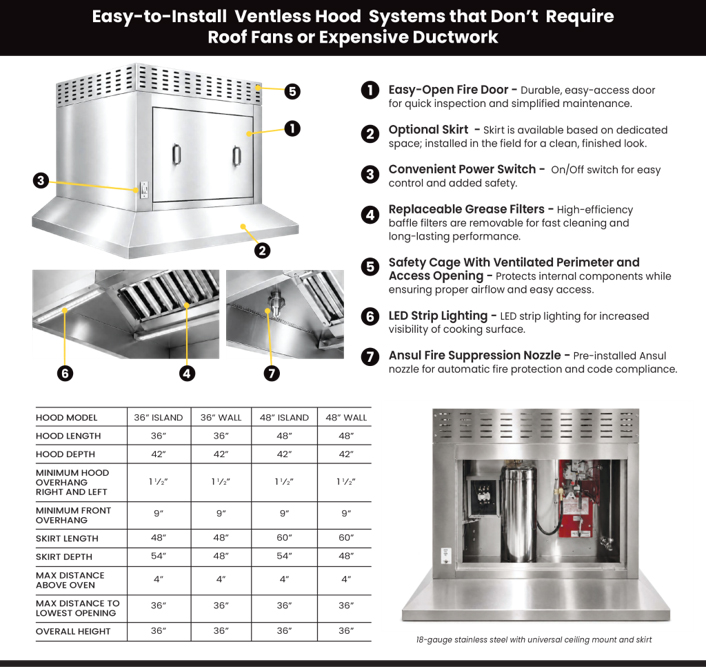
Ghost kitchens and food hall concepts lean heavily on compact, electric equipment, and that's exactly what this hood is designed around: convection ovens, conveyor ovens, combination ovens, rotisseries, and popcorn machines, rated up to 550°F. Available in 36" and 48" sizes, it's sized to fit a single-line setup without eating into a stall's already-tight footprint.
And because ghost kitchen and food hall leases move quickly, build-out schedules rarely have room for a slow permitting process. A hanging ventless hood ships in 5 to 7 business days from order approval, with no roof work or exterior fan install adding weeks to the timeline.
What's Actually Inside A Ventless Hood
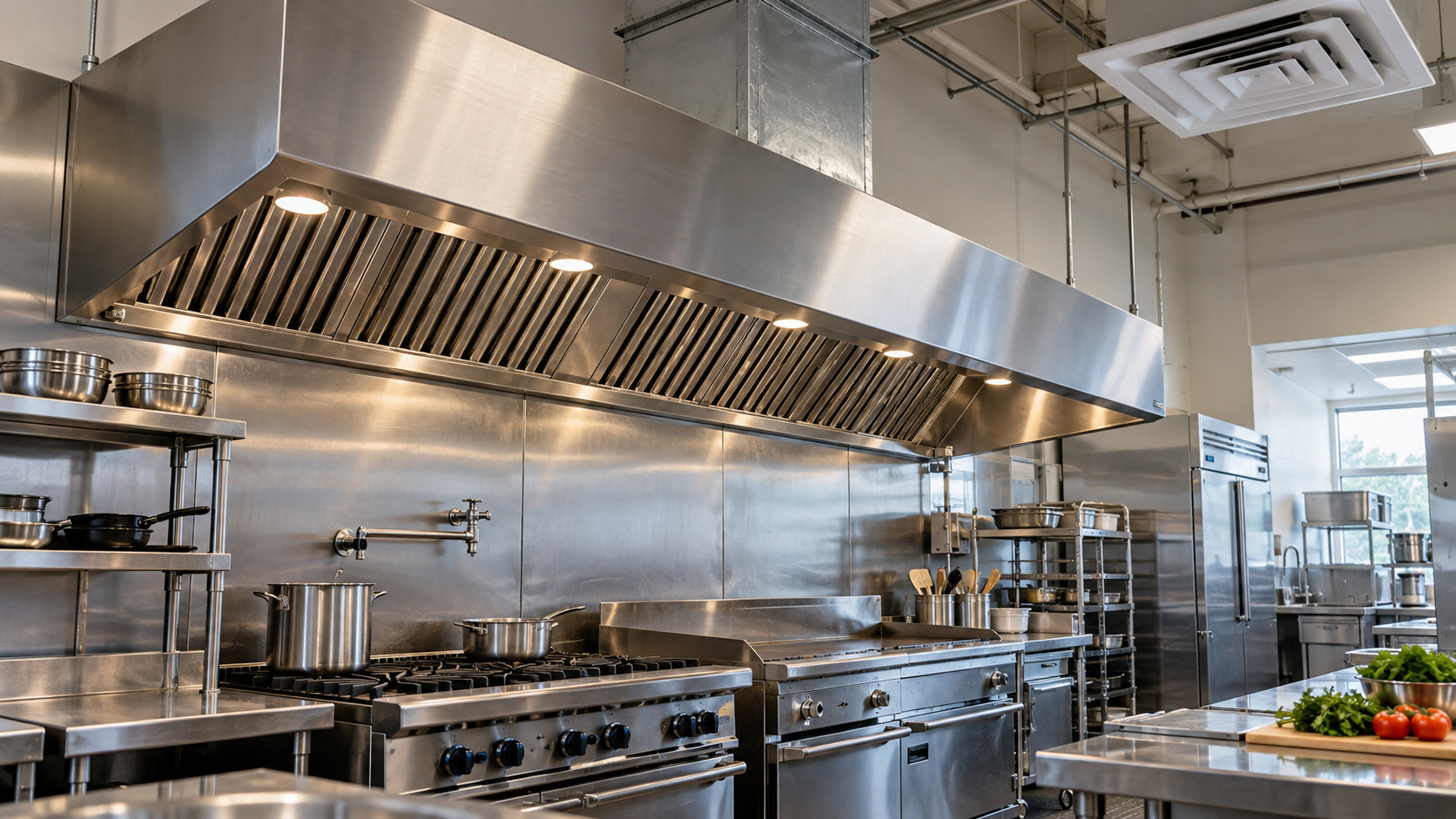
- Triple filter technology captures grease and odor through a stainless filter, aluminum mesh, and carbon filter stage
- Integrated fire suppression, pre-installed and ready for inspection
- LED strip lighting for visibility in stalls where counter space and sightlines are already tight
If You Have A Fast-Moving Lease, HoodMart Has a Ventless Solution for Your Space
A ghost kitchen or food hall stall usually has a fixed build-out window and no path to roof access. A hanging ventless hood is one of the few pieces of equipment that solves both problems without asking the landlord for anything.
Opening a stall or ghost kitchen suite? Request a hood quote, and our team can match a configuration to your space.
Frequently Asked Questions About Hanging Ventless Hoods
Q: Can a hanging ventless hood be installed in a shared ghost kitchen facility?
A: Yes. Since it doesn't require ductwork or a roof fan, it can be installed independently of the building's shared infrastructure.
Q: How fast can a hanging ventless hood be installed?
A: It ships in 5 to 7 business days from order approval, and the lack of roof work typically means a faster overall build-out.
Q: Is a hanging ventless hood a fit for a small food hall stall?
A: Yes. It's available in 36" and 48" sizes designed for compact, single-line electric equipment setups common in food halls.

 CUSTOM FABRICATORRECEIVE INSTANT QUOTE
Loading Fabricator...
PROJECT ID : T626PROJECT NAME :
Already have a project?
Login 0
0
WELCOME
START YOUR PROJECT »
1-2 WEEKS!
CHOOSE CATEGORY
Worktables
Shelving
Counters & Cabinets


WELCOME TO OUR SHOP
PROJECT DETAILS
MANAGE PROJECTS
Save your current project, or modify your previous projects
CURRENT PROJECT
PROJECT NAME :
PREVIOUS PROJECTS
No Projects found.
Thank you for
creating your project with
North American Kitchen Solutions!
Account Login
Have a design in mind? Contact Us for a Free Consult
Blog Home




Dont see your size or need a custom hood?
Let Us Help You!
Talk to a Specialist
Call Now: 1.800.715.1014