

Why Your Commercial Kitchen Loses Heat, Comfort, and Money Without Proper Makeup Air
- September 10, 2026
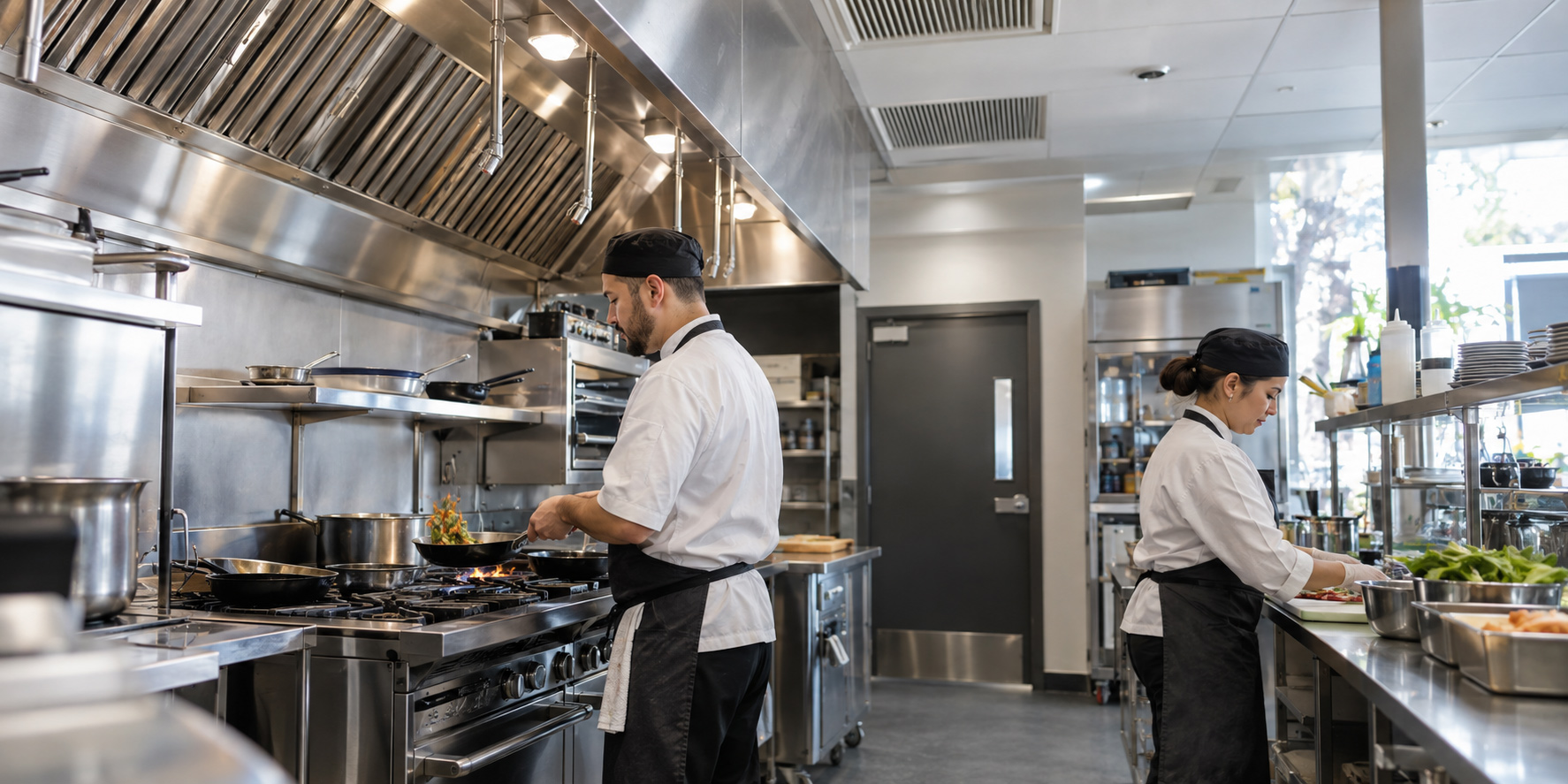
If your kitchen runs uncomfortably hot despite a functioning exhaust hood, your back door flies open on its own, or your energy bills seem disconnected from anything you can identify, there is a reasonable chance the culprit is not what you think it is. Makeup air (or the lack of it!) is one of the most consistently overlooked variables in commercial kitchen performance, and its absence tends to show up everywhere except on the equipment spec sheet where the problem actually lives. Here is what is happening and why it matters more than most operators expect.
What Negative Pressure Is and How It Develops
Every cubic foot of air your exhaust hood pulls out of the kitchen has to be replaced. When it is not, or when the replacement volume is significantly lower than the exhaust volume, the kitchen develops negative pressure relative to the surrounding spaces.
Negative pressure means the kitchen is effectively trying to pull air from anywhere it can find it:
- From under doors and through gaps in the building envelope
- From dining areas, pulling conditioned air out of customer-facing spaces
- Down through combustion appliance flues, which is called backdrafting and is a genuine safety hazard
- Through any unsealed penetration in the kitchen walls or ceiling
The kitchen does not care where the replacement air comes from. In the absence of a properly designed makeup air system, it will find a path.
What Negative Pressure Does to Your Hood
This is the part that surprises most operators. A kitchen running under significant negative pressure actively undermines the performance of the exhaust hood, regardless of how well the hood itself is sized and installed.
- Exhaust hoods rely on consistent airflow to maintain the capture velocity needed to contain the thermal plume above the cooking equipment
- Negative pressure creates competing airflow patterns that disrupt capture, allowing heat, smoke, and grease vapor to escape into the kitchen even when the hood is running at full capacity
- The exhaust fan works harder to move air against the pressure differential, increasing energy consumption and accelerating mechanical wear
- Grease filter loading increases as the disrupted airflow pattern pushes more particulate into areas of the hood not designed for primary capture
In short, an exhaust system running against negative pressure performs like an undersized system even when it is correctly specified.
The Energy Cost Nobody Talks About
Makeup air has a direct and measurable impact on energy consumption, and the math is not favorable when the system is missing or undersized.
- A kitchen in negative pressure draws conditioned air from the dining room, forcing the front-of-house HVAC system to work harder to maintain temperature
- In cold climates, infiltration air entering through gaps and doorways is unconditioned outdoor air – the kitchen is essentially heating the outdoors
- An exhaust fan working against negative pressure consumes more electricity than one operating in a balanced system
- Combustion appliances operating in a negative pressure environment may run inefficiently as the pressure differential affects burner performance
None of these costs appear as a line item labeled “missing makeup air.” They show up as elevated utility bills, HVAC complaints from the dining room, and equipment service calls that address symptoms rather than the underlying cause.
What a Properly Balanced Makeup Air System Actually Delivers
The performance difference between a kitchen with properly balanced makeup air and one without it is not subtle. Operators who retrofit a correctly sized makeup air system into a previously unbalanced kitchen consistently report the same outcomes:
- Measurably improved hood capture performance at the same or lower exhaust CFM
- Reduced kitchen ambient temperature during service
- Doors that open and close normally without fighting building pressure
- Lower utility costs as infiltration losses and HVAC compensation loads decrease
- Elimination of backdrafting concerns on gas-fired equipment
These are not marginal improvements. In a kitchen that has been operating without adequate makeup air, the difference is significant enough to be noticeable within the first service period after installation.
Tempered vs. Untempered Makeup Air
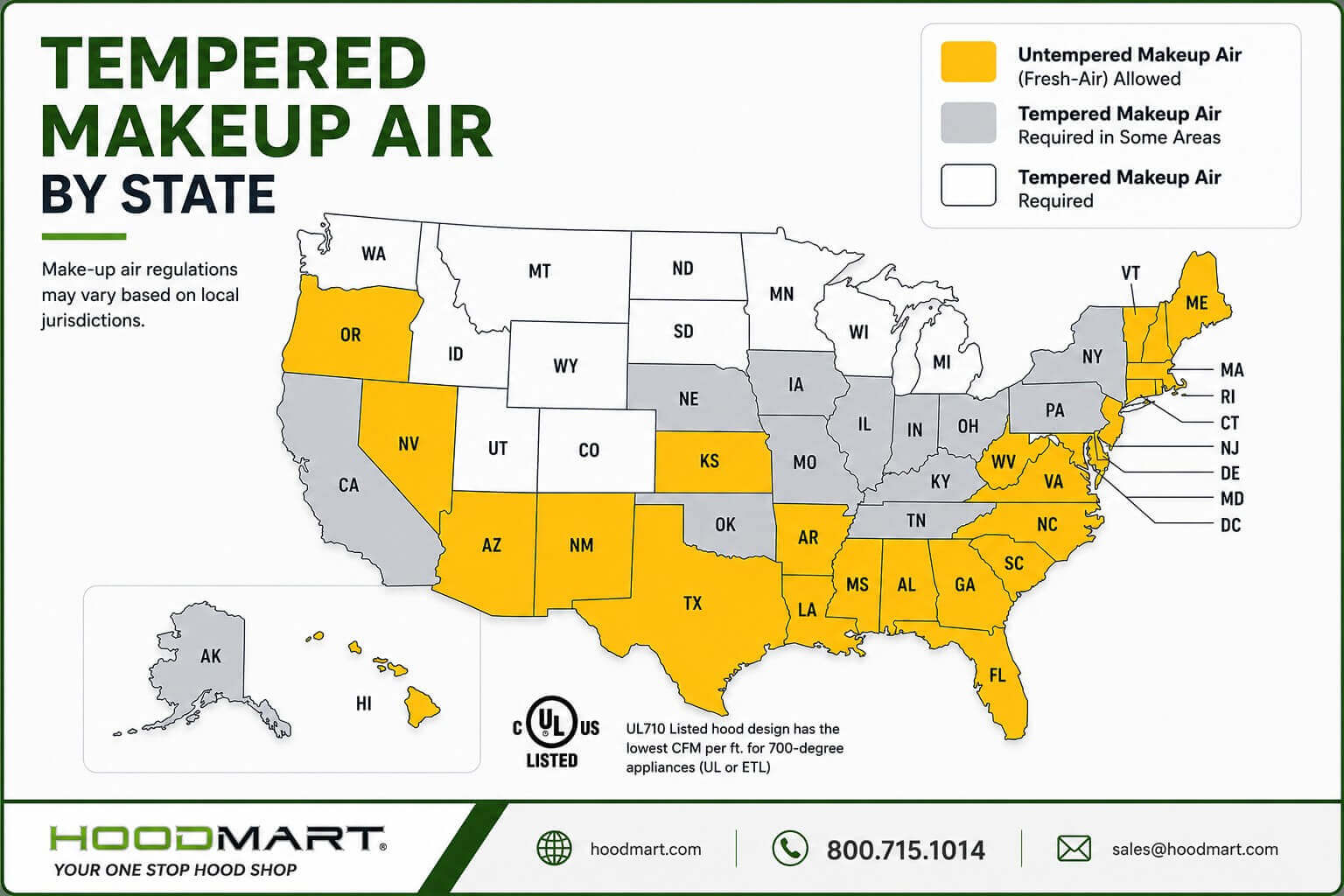
Whether your makeup air needs to be tempered, heated, or cooled before it enters the kitchen depends on your climate and jurisdiction. But the tempering question is secondary to the volume question. An untempered makeup air system that supplies the right volume is considerably better than no makeup air system at all.
- In cold climates, untempered makeup air introduces freezing outdoor air directly into the kitchen, creating comfort problems and potentially affecting cooking equipment performance
- In moderate or warm climates, untempered supply is often code-compliant and operationally acceptable
- Direct fired and indirect fired makeup air units are the two primary tempered options, each with jurisdiction-specific applicability
Confirming tempering requirements with your local AHJ before specifying equipment is the right sequence. Skipping makeup air entirely while the tempering question gets sorted out is not.
Makeup Air FAQs
Q: How do I know if my kitchen is running in negative pressure?
A: The most common signs are doors that are difficult to open, or that swing open on their own, drafts coming through gaps around doors and penetrations, and hood capture performance that seems inconsistent or poor despite the system running at full capacity. A mechanical contractor can confirm negative pressure with a simple pressure measurement if the symptoms are present but inconclusive.
Q: Can I add makeup air to an existing kitchen that does not have it?
A: Yes. Makeup air systems can be retrofitted into existing kitchens, though the complexity and cost depend on the available rooftop space, duct routing options, and whether tempered supply is required. A retrofit is almost always less expensive than continuing to absorb the ongoing energy and performance costs of operating without one.
Q: How much makeup air does my kitchen actually need?
A: Makeup air volume should be sized to replace approximately 80 to 90 percent of the exhaust CFM, with the remainder supplied through transfer air from adjacent spaces. An undersized makeup air system that supplies significantly less than the exhaust volume will still leave the kitchen in negative pressure, just to a lesser degree.
Q: Does makeup air affect the temperature in my kitchen?
A: Yes, in both directions. A properly tempered makeup air system introduces conditioned air that moderates kitchen temperature and improves comfort for kitchen staff. An untempered system in a cold climate introduces outdoor air that can make the kitchen uncomfortably cold near the supply point, even while the cooking equipment keeps the ambient temperature elevated overall.
Q: Can backdrafting from negative pressure be dangerous?
A: Yes. Backdrafting occurs when negative pressure reverses the intended airflow in a combustion appliance flue, pulling combustion gases including carbon monoxide back into the kitchen rather than exhausting them to the exterior. It is a genuine safety hazard and one of the more serious consequences of a severely unbalanced ventilation system.
A Balanced Kitchen Is a Better Kitchen
Makeup air is not a luxury line item or a code technicality – it is the other half of a ventilation system that only works correctly when both halves are present and properly matched. A kitchen running in negative pressure is paying a performance and energy penalty every single service. HoodMart can help you evaluate your current system balance and specify the right makeup air solution for your kitchen layout, climate, and exhaust volume. Request a quote today!

 CUSTOM FABRICATORRECEIVE INSTANT QUOTE
Loading Fabricator...
PROJECT ID : T626PROJECT NAME :
Already have a project?
Login 0
0
WELCOME
START YOUR PROJECT »
1-2 WEEKS!
CHOOSE CATEGORY
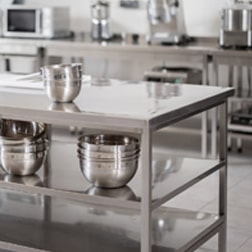
Worktables
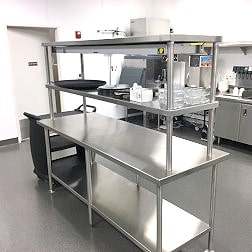
Shelving
Counters & Cabinets

WELCOME TO OUR SHOP
PROJECT DETAILS
MANAGE PROJECTS
Save your current project, or modify your previous projects
CURRENT PROJECT
PROJECT NAME :
PREVIOUS PROJECTS
No Projects found.
Thank you for
creating your project with
North American Kitchen Solutions!
Account Login
Have a design in mind? Contact Us for a Free Consult
Blog Home




Dont see your size or need a custom hood?
Let Us Help You!
Talk to a Specialist
Call Now: 1.800.715.1014