

What Comes With Your Commercial Kitchen Hood and What You Still Need to Buy
- Noviembre 19, 2026
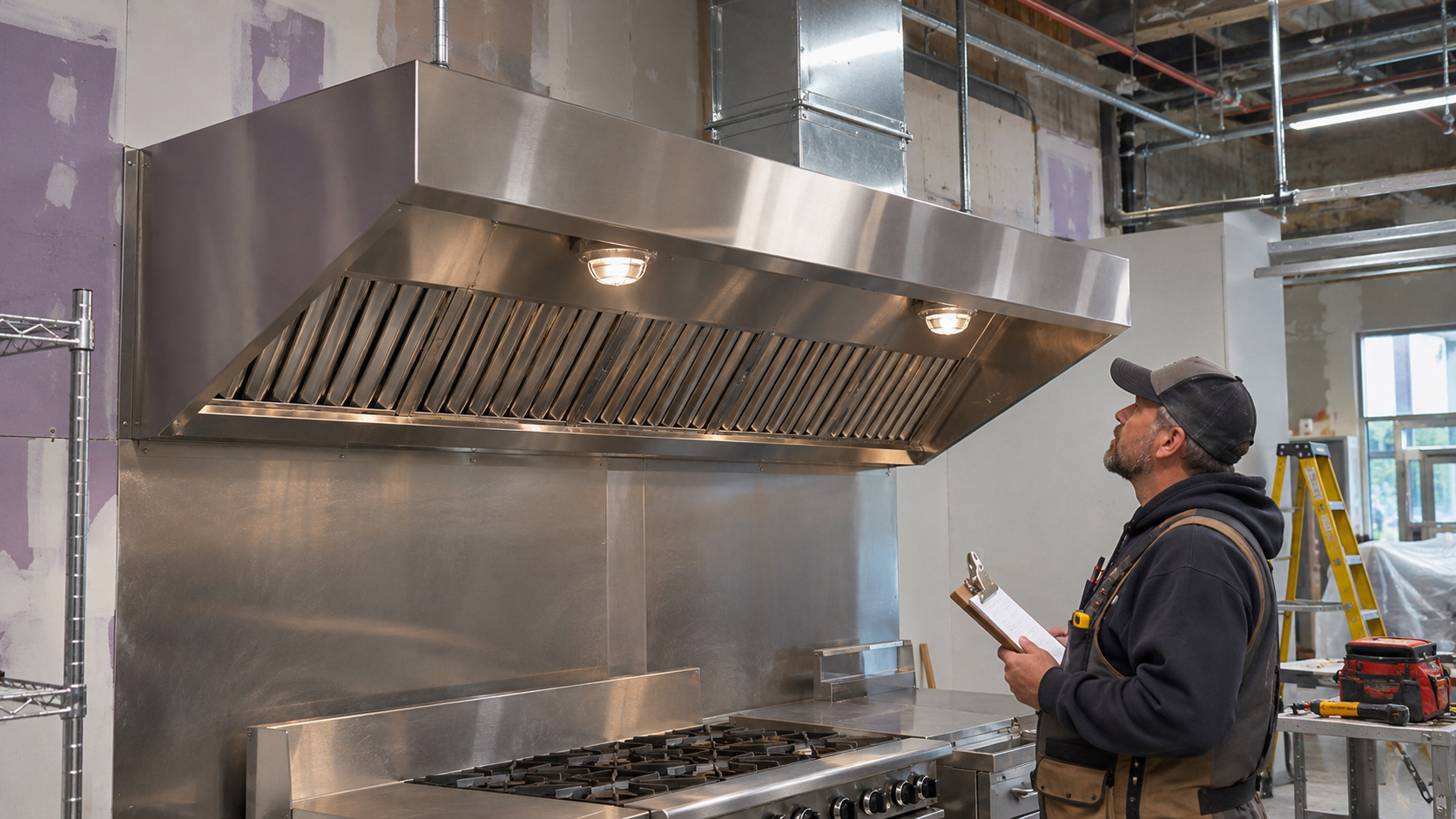
Opening a commercial hood shipment and immediately wondering where the rest of it is ranks among the more deflating moments in a kitchen buildout. The hood itself arrives exactly as ordered. Everything else, including the ductwork, fan, and makeup air unit, is a separate conversation.
Here is a straightforward breakdown of what is typically included with your hood and what you will need to source separately before beginning the commercial exhaust hood installation process.
What Is Typically Included With Your Commercial Hood?
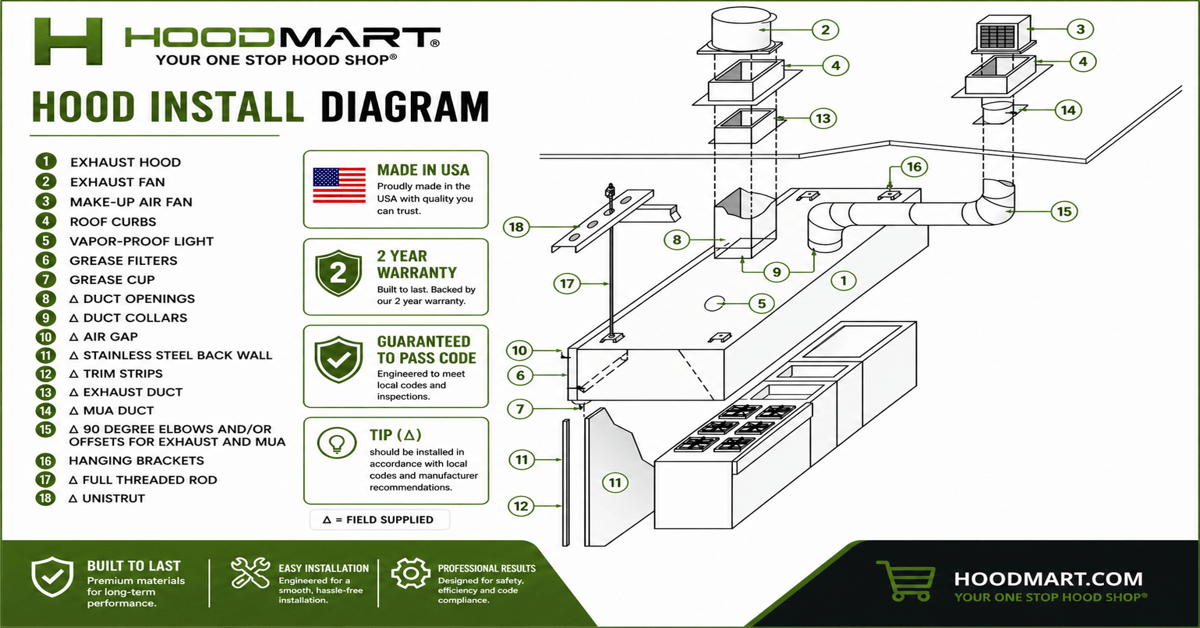
HoodMart hoods ship with the core components needed to get the unit ready for installation. Depending on the hood model and configuration, included components generally cover:
- The exhaust hood body, constructed of stainless steel
- Grease filters, sized and positioned for the hood's capture area
- A grease cup for collecting grease runoff from the filters
- Vapor-proof lighting inside the hood canopy
- Duct collars and duct openings for exhaust and makeup air connections
- A stainless steel back wall where applicable to the model
- Trim strips for finishing the hood-to-wall connection
These are the components that typically ship with the hood and are ready to install as a unit. Everything downstream of the hood collar is a different category entirely.
What You Will Need to Supply in the Field
Field-supplied components are everything required to connect the hood to the building's exhaust and makeup air systems. These depend on your specific building layout, ceiling height, duct path, and local code requirements.
Common field-supplied components include:
- Exhaust duct running from the hood collar to the rooftop exhaust fan
- Makeup air duct connecting the makeup air fan to the hood or kitchen supply point
- Exhaust and makeup air fans sized to the hood's CFM requirements
- Roof curbs for mounting fans at the rooftop penetration point
- 90-degree elbows and offsets required to navigate the duct path through the building
- Hanging brackets, fully threaded rod, and Unistrut for suspending the hood from the ceiling structure
- Fire suppression system components, including the suppression agent tank, nozzles, and actuation hardware
The field-supplied list is longer than most restaurant owners expect, and the cost of these components can approach or exceed the cost of the hood itself, depending on the installation complexity.
Why the Distinction Matters Before You Order
Understanding which components are included and which are field-supplied before your hood ships helps prevent two very specific problems: budget surprises and installation delays.
- Contractors price field-supplied components separately from the hood itself.
- Lead times on fans, makeup air units, and roof curbs can extend the project timeline if they are not ordered in parallel with the hood.
- Some field-supplied components, particularly fire suppression systems, require separate permitting and inspection coordination.
Reviewing the full component list with your contractor before the hood order is placed helps keep the project moving on a predictable schedule.
A Note on Fire Suppression
Fire suppression is generally required for Type I commercial hood installations and is typically installed by a licensed fire suppression contractor. It is an essential part of code compliance, and the inspection process runs parallel to building and mechanical inspections.
- The suppression system must be compatible with the hood model and cooking equipment below.
- Ansul and Kidde are two commonly specified systems for commercial kitchen installations.
- Your fire suppression contractor coordinates with the Authority Having Jurisdiction (AHJ) on permitting and inspection scheduling.
Do not assume this is handled until you have confirmed it with both your contractor and your suppression vendor.
Ready to Order Your Commercial Hood?
Understanding what is included and what still needs to be sourced is the first step toward an installation that goes smoothly. HoodMart's team can walk you through the full component picture for any hood configuration and help you plan the complete system, not just the hood itself.
Frequently Asked Questions About Commercial Exhaust Hood Installation
Can I order the exhaust fan and makeup air unit from HoodMart too?
Yes. HoodMart supplies exhaust fans, makeup air units, and roof curbs in addition to hoods. Ordering the full system from a single supplier simplifies coordination and helps ensure the components are properly matched to your hood's CFM requirements.
How do I know what size exhaust fan I need?
Fan sizing is based on your hood's CFM requirement, which is determined by cooking equipment type, duty level, and hood length. HoodMart can help you confirm the right fan specification when you request a quote.
Do I need a licensed contractor to install a commercial hood?
Commercial hood installation involves mechanical, electrical, and fire suppression work that typically requires licensed contractors and permits. Consult your local authorities to confirm applicable installation requirements.
What is a roof curb and do I need one?
A roof curb is a raised frame that mounts at the rooftop penetration point, providing a weather-tight base for the exhaust or makeup air fan. Your contractor and hood supplier can confirm the appropriate curb configuration for your fan model and installation.



Blog Home




Dont see your size or need a custom hood?
Let Us Help You!
Talk to a Specialist
Call Now: 1.800.715.1014