

Why Hood Overhang and Mounting Height Actually Matter for Your Restaurant
- October 06, 2026
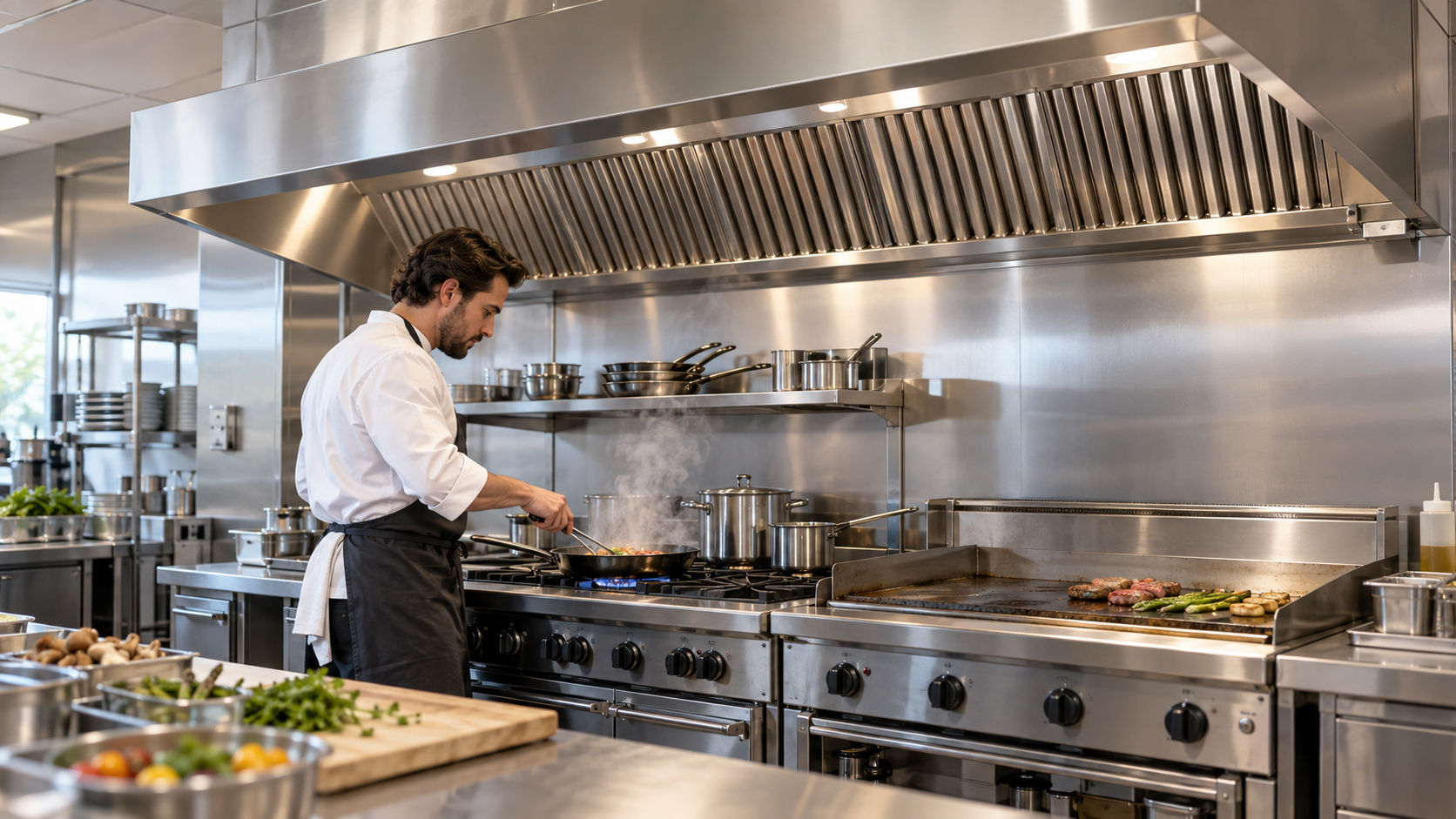
A commercial hood that looks right is not the same as a commercial hood that works right. Two of the most common installation variables that get eyeballed instead of calculated are overhang and mounting height, and both have a direct, measurable impact on whether your hood actually captures what it is supposed to capture. Getting either one wrong does not always fail inspection immediately. It just means your kitchen runs hot, smoky, and greasy until someone figures out why.
What Is Hood Overhang and Why Does It Matter?
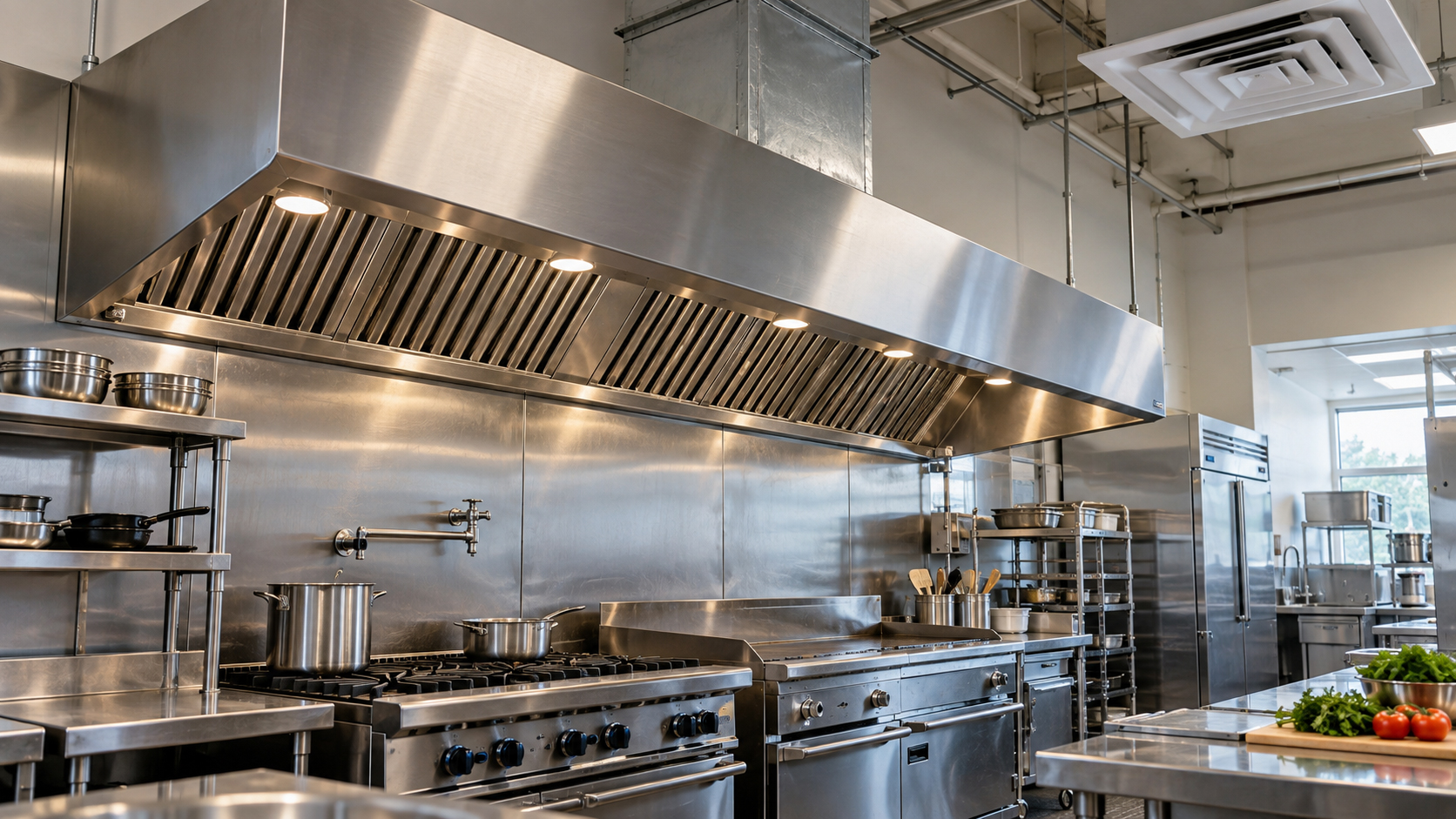
Hood overhang refers to how far the hood extends beyond the edge of the cooking equipment on each side. It is not an aesthetic preference – it is a functional requirement tied directly to the hood's ability to capture heat, smoke, and grease-laden vapors before they escape into the kitchen.
- The standard minimum overhang is 6 inches on all open sides of the cooking equipment
- Wall-mounted hoods on enclosed sides may have reduced or no overhang requirement on the wall side
- Insufficient overhang allows cooking effluent to roll out from under the hood edges and into the kitchen
The overhang requirement exists because heat and smoke do not rise in a perfectly vertical column. They spread as they rise, and the hood needs to be large enough to intercept the full plume before it escapes the capture zone.
How Cooking Equipment Type Affects Overhang Requirements
Not all cooking equipment produces the same plume spread, and overhang requirements reflect that. Higher-intensity equipment generates more lateral plume spread and may require greater overhang than the standard minimum.
- Charbroilers and open-flame equipment produce wider, less predictable plume patterns and typically require more overhang than enclosed equipment
- Equipment with high heat output positioned near the edge of the cooking line is particularly vulnerable to capture failure with minimal overhang
- A hood sized only to the footprint of the cooking equipment, without adequate overhang, is almost always undersized for real-world performance
When in doubt, more overhang is better than less. The cost of a slightly larger hood is considerably lower than the cost of a kitchen that never quite ventilates properly.
What Is Mounting Height and How Is It Calculated?
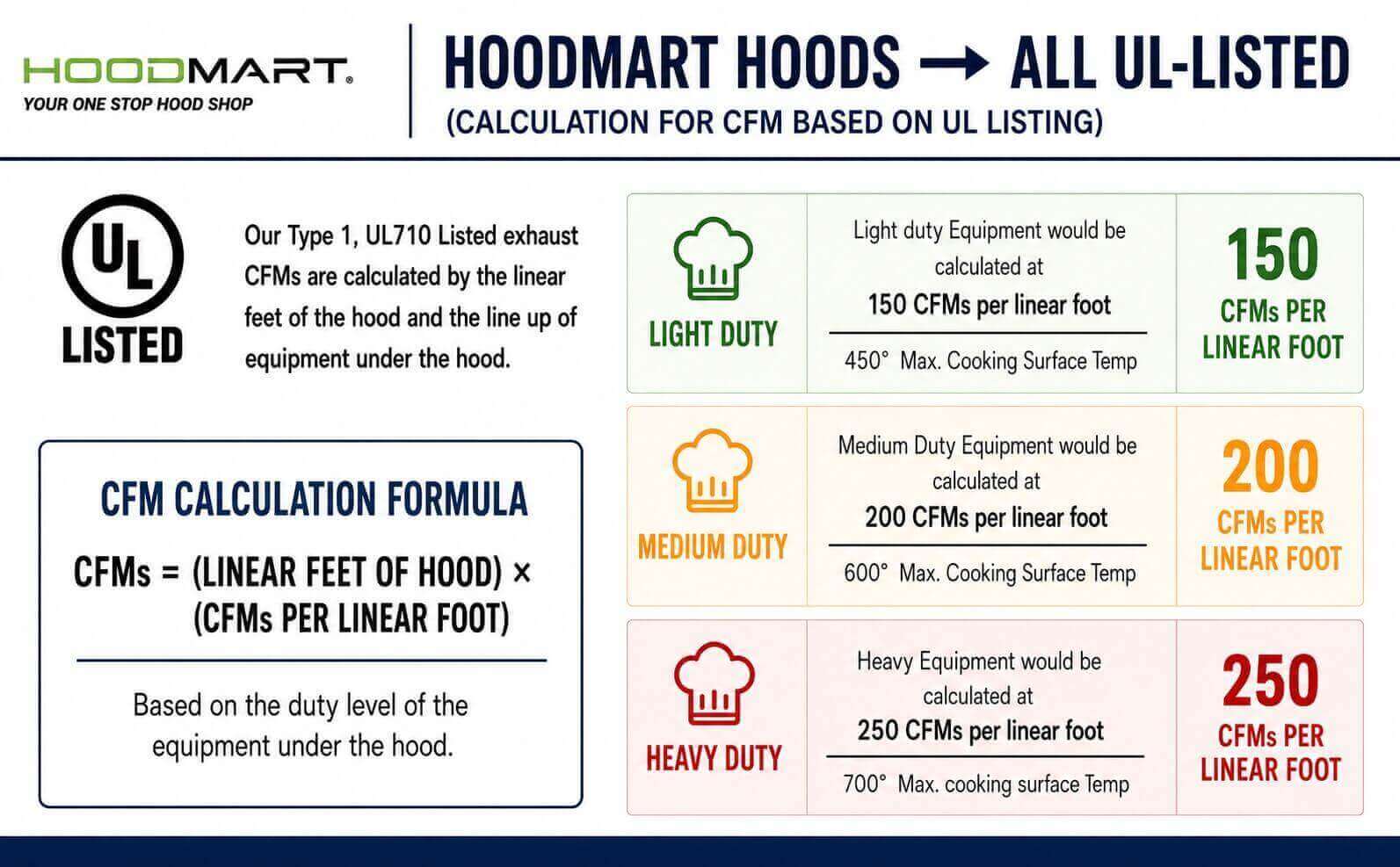
Mounting height is the vertical distance between the bottom of the hood and the cooking surface below it. It is one of the primary variables in CFM calculation and has a direct effect on capture efficiency.
Standard mounting height guidelines:
- For most cooking equipment, the recommended mounting height is between 18 and 48 inches above the cooking surface
- Lower mounting heights improve capture efficiency and allow for lower CFM requirements
- Higher mounting heights require more CFM to maintain equivalent capture performance
- Exceeding the maximum recommended mounting height can compromise capture entirely, regardless of fan capacity
Mounting height is not always a free choice. Ceiling height, equipment dimensions, and ADA clearance requirements in some kitchen configurations all constrain how low a hood can realistically be mounted.
How Overhang and Mounting Height Work Together
Overhang and mounting height are not independent variables; they interact. A hood mounted at the high end of the acceptable range needs to be larger in plan to compensate for the increased plume spread at greater distances from the cooking surface.
- A hood mounted higher requires more overhang to maintain equivalent capture performance
- A hood with minimal overhang mounted at maximum height is the worst-case combination for capture efficiency
- Both variables should be confirmed together during the design phase, not adjusted independently after the fact
This is the kind of calculation that looks straightforward on paper and gets complicated quickly in real kitchens with real ceiling constraints.
What to Confirm Before Your Hood Is Installed
Before installation day, these are the questions worth having answered in writing from your hood supplier and professional installer:
- What is the specified overhang on each open side of the cooking equipment?
- What is the confirmed mounting height from cooking surface to hood bottom?
- Has the CFM calculation been adjusted to reflect the actual mounting height?
- Has the hood size been confirmed against the full cooking equipment footprint plus required overhang?
Getting these confirmed before the hood goes up is significantly easier than correcting them after.
Get Your Hood Sized and Positioned Correctly From the Start
A hood that is the wrong size or mounted at the wrong height is not a minor inconvenience -- it is a system that will underperform for the life of the installation. HoodMart's team can help you confirm the right hood dimensions, overhang, and mounting height for your specific cooking equipment and kitchen layout. Request a quote from HoodMart today.

 CUSTOM FABRICATORRECEIVE INSTANT QUOTE
Loading Fabricator...
PROJECT ID : T626PROJECT NAME :
Already have a project?
Login 0
0
WELCOME
START YOUR PROJECT »
1-2 WEEKS!
CHOOSE CATEGORY
Worktables
Shelving
Counters & Cabinets


WELCOME TO OUR SHOP
PROJECT DETAILS
MANAGE PROJECTS
Save your current project, or modify your previous projects
CURRENT PROJECT
PROJECT NAME :
PREVIOUS PROJECTS
No Projects found.
Thank you for
creating your project with
North American Kitchen Solutions!
Account Login
Have a design in mind? Contact Us for a Free Consult
Blog Home




Dont see your size or need a custom hood?
Let Us Help You!
Talk to a Specialist
Call Now: 1.800.715.1014