

Kidde vs. Ansul: Which Fire Suppression System Is Right for Your Commercial Kitchen?
- Septiembre 04, 2026
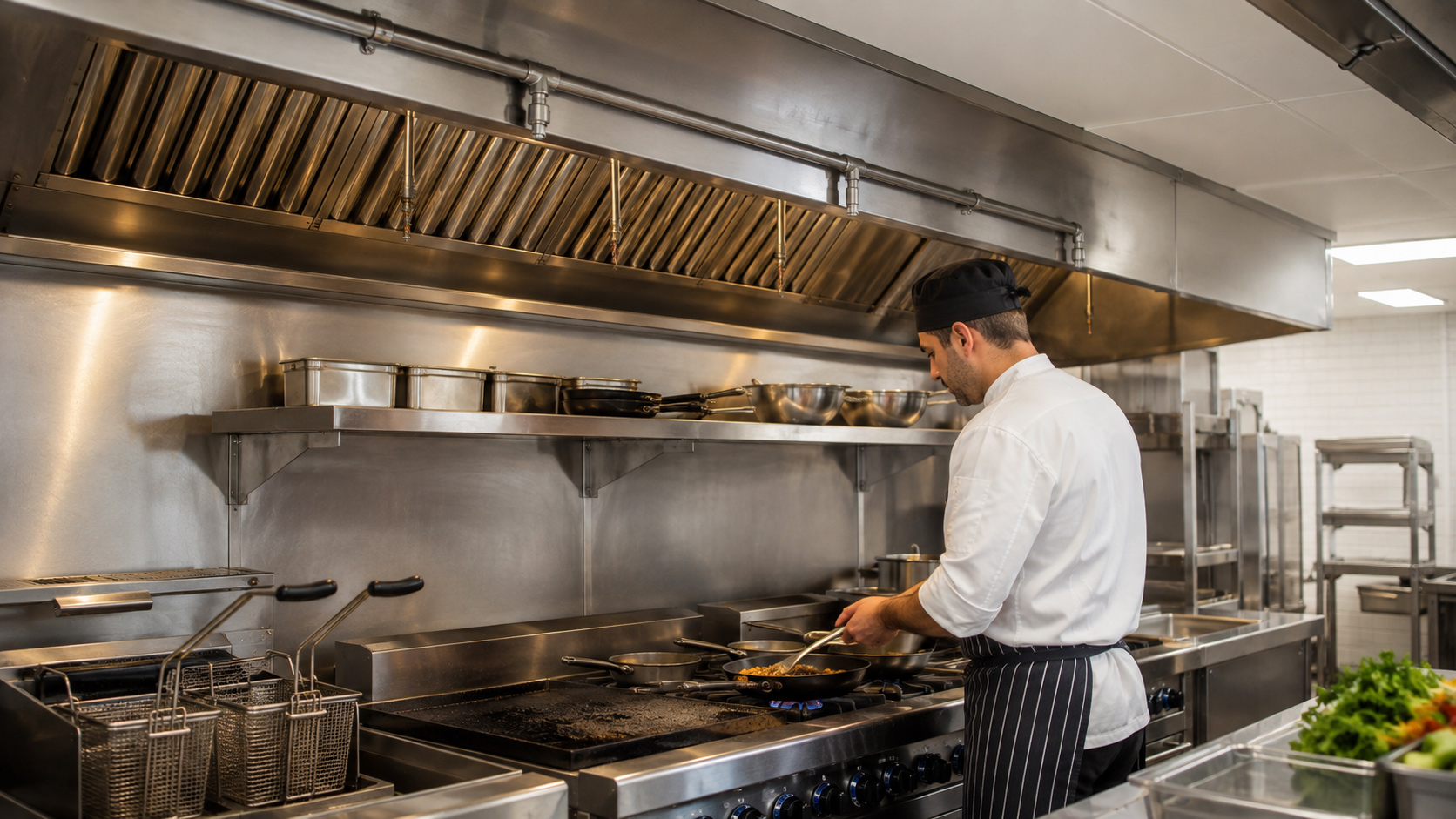
Every commercial kitchen is required to have a fire suppression system installed above cooking equipment. Choosing the right one affects installation time, inspection outcomes, and long-term reliability. HoodMart carries both Kidde and Ansul systems, and understanding the differences helps you make the right call before the job starts.
What Is a Commercial Kitchen Fire Suppression System?
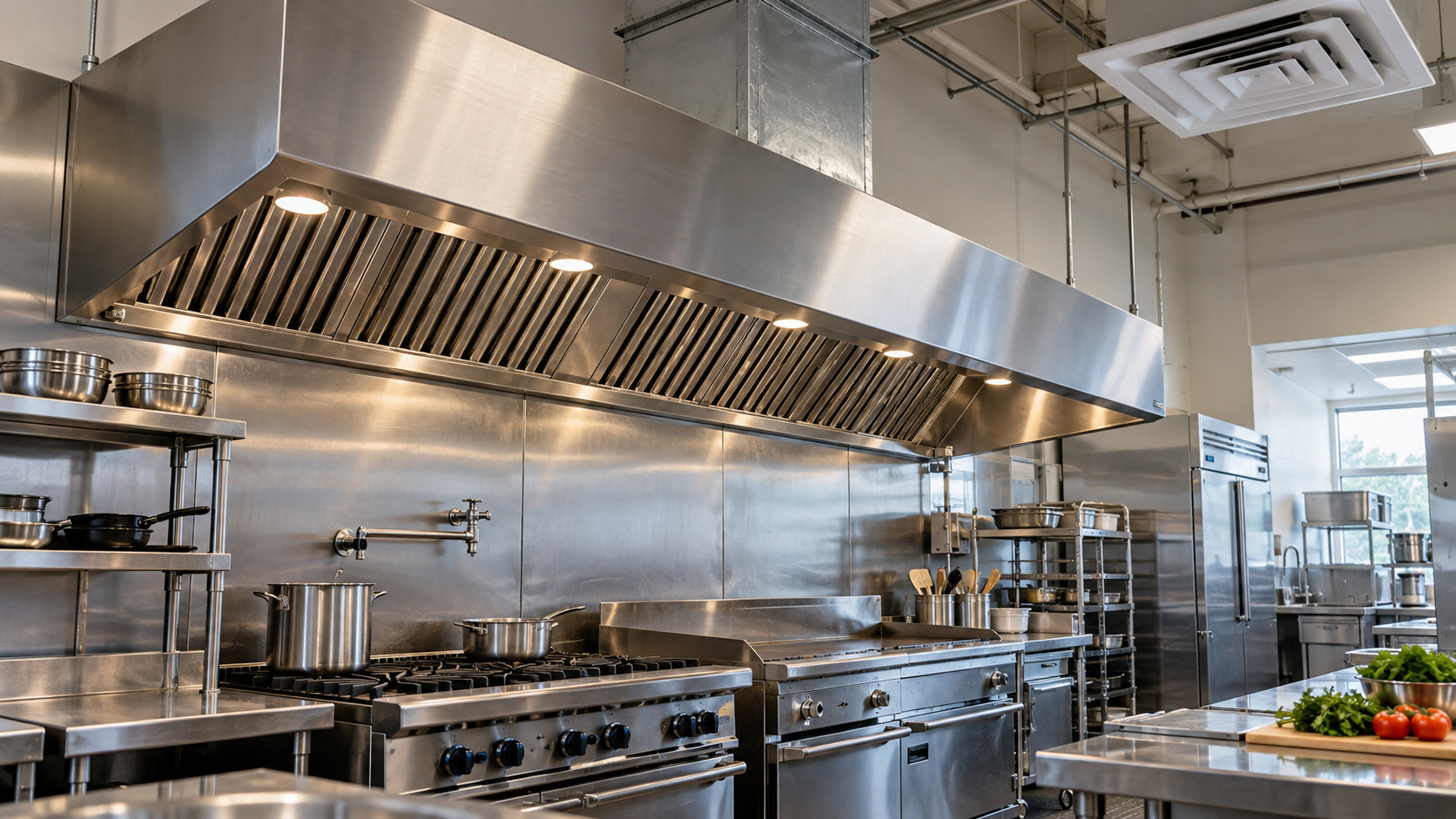
A fire suppression system is a code-required, automatic wet chemical system mounted within your exhaust hood. It detects heat and discharges a suppression agent directly onto cooking equipment and into the duct to extinguish a fire before it spreads.
Key features of a commercial kitchen fire suppression system include:
- Activates automatically via heat detectors
- Shuts off the gas and electrical supply to the cooking equipment upon discharge
- Must be inspected and serviced every six months per NFPA 96
- Required for all Type 1 hood installations above grease-producing equipment
Compliance is not optional. Both Kidde and Ansul meet the UL 300 standard required for commercial kitchen installations.
Kidde Fire Suppression: Key Features
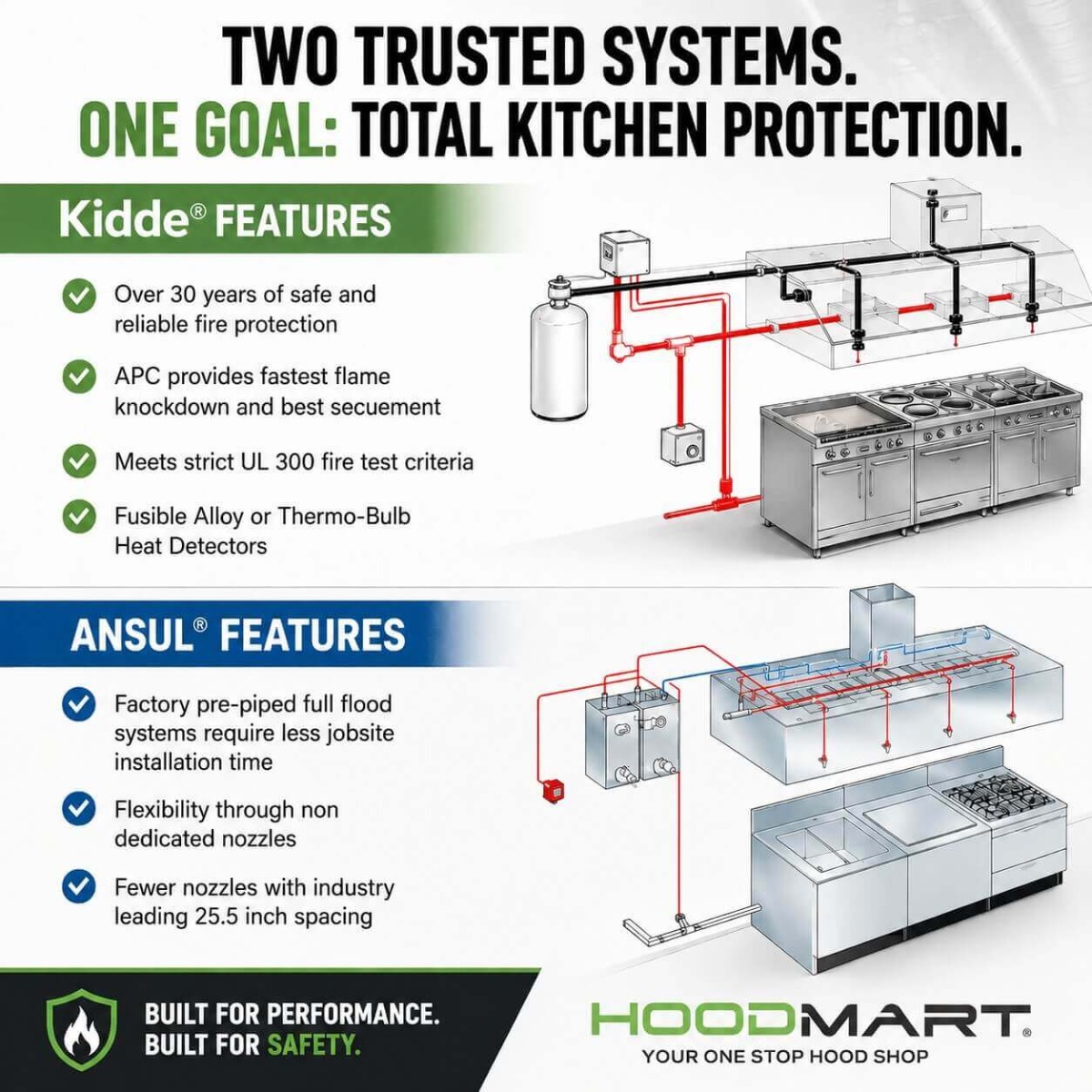
Kidde has been a trusted name in fire protection for over 30 years. Its Automatic Pyro-Chem Commercial Cooking (APC) system is engineered for fast, reliable knockdown of cooking fires. These systems feature:
- APC technology delivers the fastest flame knockdown and best re-ignition prevention in its class
- Meets strict UL 300 fire test criteria
- Compatible with fusible alloy or thermo-bulb heat detectors
- Ideal for kitchens that prioritize proven, straightforward suppression performance
Kidde is a reliable choice for operators who want a well-established system with a long track record.
Ansul Fire Suppression: Key Features
Ansul systems are engineered with flexibility and faster installation in mind. The factory pre-piped design makes Ansul a practical option for operators and installers working against tight timelines. Highlights of Kidde systems include:
- Factory pre-piped, full-flood systems reduce jobsite installation time significantly
- Non-dedicated nozzles offer configuration flexibility across different equipment layouts
- Industry-leading 25.5-inch nozzle spacing means fewer nozzles required per installation
- Well-suited for larger or more complex kitchen configurations
Ansul's design reduces both labor hours on installation day and the number of components required to cover your cooking surface area.
Kidde vs. Ansul: How to Choose
Both systems meet code.
The decision typically comes down to kitchen layout, timeline, and installer preference.
- Choose Kidde if you prioritize proven flame knockdown performance and heat detector flexibility
- Choose Ansul if faster jobsite installation or a more complex equipment layout is the priority
- Consult your local fire marshal or AHJ (authority having jurisdiction) before finalizing your selection
- Both systems require professional installation and semi-annual inspection per NFPA 96
When in doubt, your HoodMart representative can help match the right system to your hood and equipment configuration.
Fire Suppression System Maintenance Requirements
A suppression system that is not maintained is a liability. NFPA 96 is specific about service intervals, and most jurisdictions enforce them during health and fire inspections.
- Semi-annual inspection by a licensed fire suppression contractor is required
- Fusible links and nozzle caps must be replaced at each service
- Discharge and recharge procedures must be documented
- Systems must be re-inspected after any discharge or equipment change
Keep service records on file. Inspectors will ask for them.
FAQ: Commercial Kitchen Fire Suppression
Q: Are Kidde and Ansul both UL 300 listed?
A: Yes. Both systems meet UL 300 standards, which is the minimum requirement for commercial kitchen fire suppression in the United States.
Q: Can I install a fire suppression system myself?
A: No. Both systems must be installed and serviced by a licensed fire suppression contractor.
Q: How often does a commercial kitchen fire suppression system need to be inspected?
A: Every six months, per NFPA 96. Most jurisdictions enforce this during routine fire inspections.
Q: Does HoodMart sell fire suppression systems with hoods?
A: Yes. HoodMart offers Kidde and Ansul systems and can help you select the right option based on your hood and equipment layout. We do not sell Fire Suppression systems as a standalone for an existing kitchen hood.
Q: Does HoodMart sell fire suppression systems without hoods?
A: No. Fire suppression systems are sold as part of a hood or hood package. We do not sell Fire Suppression systems as a standalone for an existing kitchen hood.
Get the Right System for Your Kitchen
Fire suppression is not a place to guess. Whether you are outfitting a new build or replacing an existing system, HoodMart can help you identify the right Kidde or Ansul system for your specific setup. Contact HoodMart at 1.800.715.1014 or get a commercial kitchen quote today to get started.

 CUSTOM FABRICATORRECEIVE INSTANT QUOTE
Loading Fabricator...
PROJECT ID : T626PROJECT NAME :
Already have a project?
Login 0
0
WELCOME
START YOUR PROJECT »
1-2 WEEKS!
CHOOSE CATEGORY

Worktables
Shelving
Counters & Cabinets

WELCOME TO OUR SHOP
PROJECT DETAILS
MANAGE PROJECTS
Save your current project, or modify your previous projects
CURRENT PROJECT
PROJECT NAME :
PREVIOUS PROJECTS
No Projects found.
Thank you for
creating your project with
North American Kitchen Solutions!
Account Login
Have a design in mind? Contact Us for a Free Consult


Blog Home




Dont see your size or need a custom hood?
Let Us Help You!
Talk to a Specialist
Call Now: 1.800.715.1014